Why Paver Patios Shift and Sink Over Time
July 23, 2026
Paver patios sink and shift for one core reason: something goes wrong beneath the surface. The most common causes are a poorly compacted base, inadequate base depth, water washing out the material under the pavers, poor drainage, and missing edge restraint that lets the pavers spread. Almost every sinking patio traces back to one of these, and the good news is that each is preventable with the right installation and fixable once it starts.
At Obee Landscaping LLC, we install and repair paver patios across central Connecticut, from Wethersfield and Newington to Glastonbury, Middletown, and Manchester. We see the same failure patterns season after season, so this guide explains what actually causes a patio to sink here, how to spot it early, and what it takes to fix it for good.
Start with the causes, then see how to prevent and repair the problem.
In This Guide
- The real reasons paver patios sink: The five causes behind almost every failure.
- The causes at a glance: Match the symptom to the cause.
- Early warning signs: Catch it before it gets worse.
- How Connecticut weather makes it worse: Freeze, thaw, and heavy rain.
- How to prevent a sinking patio: Do it right the first time.
- How a sinking patio gets fixed: What a proper repair involves.
- Frequently asked questions: Quick answers to common questions.
The Real Reasons Paver Patios Sink
Pavers themselves rarely fail. When a patio sinks or shifts, the problem is almost always in the layers below the pavers or at the edges holding them in place.
Poor Base Preparation
The base is the foundation of the entire patio, and a weak one is the number one cause of sinking. If the crushed stone base is too shallow, poorly compacted, or skipped in favor of just sand, the pavers have nothing solid to rest on.
Over time, traffic and weather press the pavers down into the soft material below, creating dips and low spots. A proper base is compacted in layers to a depth suited to the use, which is exactly what our guide on what to put under a paver patio walks through.
The temptation to cut the base short is understandable, since it is buried and invisible once the patio is finished. But it is the part carrying all the weight, and skimping there is the most expensive shortcut a homeowner can end up paying for later.
Poor Compaction
Even the right materials fail if they are not compacted correctly. Loose base or bedding material settles unevenly once weight and weather act on it.
Compaction has to happen in stages as the base is built up, not all at once at the end. Skipping this step is a shortcut that shows up as a sunken patio within a season or two.
The right way uses a plate compactor on each layer of base as it goes down, so the whole depth is dense and stable. A base that was only tamped by foot or compacted once at the surface leaves loose material underneath that has nowhere to go but down once the patio sees real use.
Water and Erosion Under the Pavers
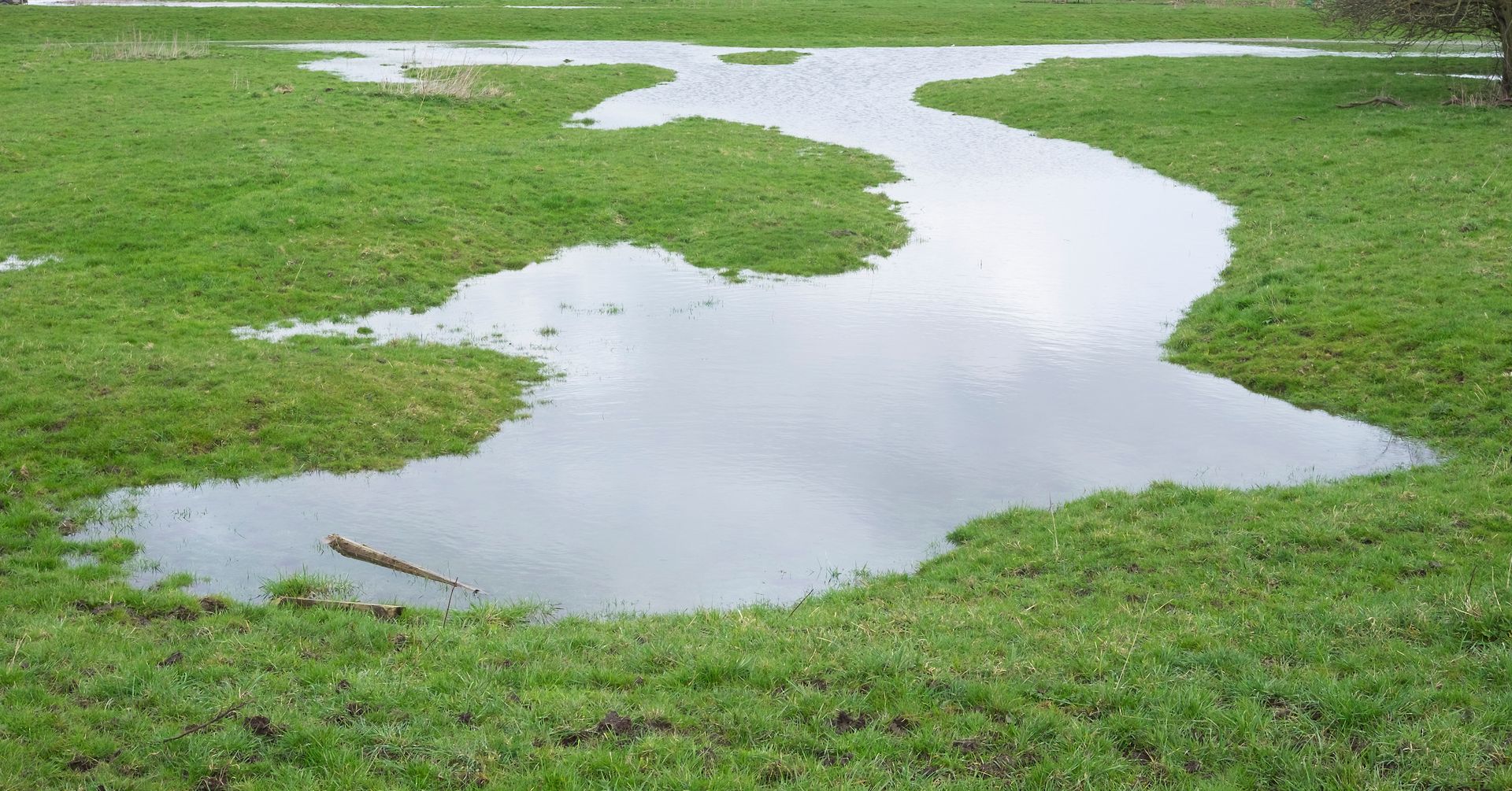
Water is the enemy of a paver base. When it flows under the pavers, it washes out the fine material that holds everything in place, leaving voids that the pavers then collapse into.
This is why drainage and grading matter so much. Water pooling on or around the patio, or running toward it from a downspout, steadily erodes the base until the surface fails.
Erosion is often the sneakiest cause because it happens out of sight. A patio can look fine for years while water quietly hollows out the base beneath it, and then a section drops suddenly once the void is large enough to give way.
Poor Drainage and Grading
A patio should be built with a slight slope so water runs off rather than sitting or soaking in. When the grade is flat or tilts the wrong way, water collects and works its way into the base.
Poor site drainage compounds the problem. If the surrounding yard sheds water toward the patio, even a good base eventually erodes, which ties directly into broader yard drainage problems.
The correct slope is subtle, usually about an eighth of an inch per foot, enough to move water off the surface without being noticeable underfoot. When that slope is missing or a settling patio creates a reverse pitch, water starts collecting in exactly the spot that is already weakening.
Missing or Failed Edge Restraint
Edge restraint is the border that locks the outer pavers in place. Without it, or when it fails, the perimeter pavers slowly spread outward, the joints open, and the field shifts and dips.
It is an easy component to overlook, but it is what keeps the whole patio tight and stable for the long term. Once the edges begin to spread, the failure works inward, because every paver relies on its neighbors for support. A failed edge on one side can loosen a surprising amount of the patio over a season or two.
The Causes at a Glance
This table connects each common cause to what it looks like on the surface and what the fix involves.
| Cause | What You See | Typical Fix |
|---|---|---|
| Poor base prep | Broad dips and low spots | Lift pavers, rebuild base |
| Poor compaction | Uneven settling within a season | Recompact and reset |
| Erosion under pavers | Sudden voids, washed-out sand | Fix drainage, rebuild base |
| Poor drainage or grading | Water pooling on the patio | Regrade or add drainage |
| Failed edge restraint | Spreading edges, open joints | Reinstall edge restraint |
The pattern is consistent: the surface symptom points to a specific cause below, and a lasting repair always addresses that underlying cause rather than the pavers alone.
Early Warning Signs
Catching a sinking patio early makes the repair smaller and cheaper. A few signs tell you the base is starting to fail before the damage becomes obvious.
What to Watch For
- Dips or low spots where water now pools after rain.
- Uneven or lifted pavers that create trip points.
- Widening joints or sand washing out between pavers.
- Pavers spreading at the edges where restraint is failing.
Why Acting Early Matters
A small dip is a localized fix. Left alone, it channels more water into the base, which widens the failure and can eventually undermine a large section of the patio.
The longer a base problem goes unaddressed, the more of the patio has to be lifted and reset to correct it. Early action keeps a minor reset from becoming a full rebuild.
There is also a safety angle. Lifted or uneven pavers become trip hazards, and a low spot that collects water turns into a slick patch or an ice sheet in winter, so addressing the shift early protects more than just the look of the patio.
How Connecticut Weather Makes It Worse
Our climate puts extra stress on a paver base, which is why installation standards that work in milder regions are not always enough here.
The Freeze-Thaw Cycle
Connecticut winters bring repeated freezing and thawing. Water trapped in a poorly draining base freezes, expands, and lifts the pavers, then leaves gaps when it thaws.
This cycle repeats all winter, and each round shifts the pavers a little more. A base that drains freely and does not hold water is the best defense, which is why material choice and grading are so important in our region.
It also explains why a patio can look perfect in the fall and show dips by spring. A single Connecticut winter of repeated freezing and thawing can undo a marginal base that seemed fine through the warmer months.
Heavy Rain and Spring Runoff
Our heavy rains and spring snowmelt send large volumes of water across the yard. If that water is not directed away from the patio, it accelerates the erosion that undermines the base.
Managing where that water goes, sometimes with grading or a drainage feature, protects the patio through the wettest parts of the year. Our team weighs these factors when deciding between a retaining wall and regrading on sloped sites.
A patio at the bottom of a slope is especially vulnerable, since gravity sends every rainstorm and snowmelt straight toward it. On those sites, controlling the water is not optional; it is the main thing standing between a stable patio and a sinking one.
How to Prevent a Sinking Patio
Prevention is far cheaper than repair, and it all happens during installation. A patio built correctly rarely sinks.
Build on a Proper Base
The single most important step is an adequate, well-compacted crushed stone base. Depth and compaction should match how the patio will be used, with more base under areas that carry heavier loads.
A patio walked on casually needs less than one that will hold a hot tub or outdoor kitchen, so the base is planned around the intended use rather than a one-size guess.
- Excavate deep enough for a full base plus bedding.
- Compact in layers rather than all at once.
- Use the right materials for base and bedding, not just sand.
Get Drainage and Edges Right
Grading the surface to shed water and directing site drainage away from the patio protect the base from erosion. Proper drainage and irrigation planning keeps water from ever reaching the base in the first place.
Solid edge restraint and polymeric sand in the joints lock the surface together, so the pavers stay tight and stable for years. These finishing steps are what separate a patio that lasts from one that spreads.
None of these steps are glamorous or visible in the finished patio, which is part of why they get shortchanged by cut-rate installers. But they are the difference between a patio that stays level for decades and one that needs attention within a few years.
How a Sinking Patio Gets Fixed
The right repair depends on how far the problem has spread, but the principle is always the same: fix the base, not just the surface.
Localized Resetting
For a small dip or a few lifted pavers, the fix is to lift the affected pavers, correct the base beneath them, and reset the pavers level. This restores the area without disturbing the rest of the patio.
Simply adding sand on top or relaying pavers without fixing the base only hides the problem, which returns quickly. The base issue has to be corrected for the repair to hold.
Because the pavers themselves are usually reusable, a localized reset is a relatively affordable repair. It costs far less than a new installation, which is one more reason to act while the problem is still small. For a sense of full installation pricing, our paver patio cost guide puts repair costs in context.
Larger Rebuilds
When water or poor compaction has undermined a large section, more of the patio has to come up so the base can be rebuilt and recompacted properly. It is more involved, but it is the only lasting fix for widespread failure.
This is where the original installation quality really shows. A patio that was built well is usually a small reset, while one built on a poor base often needs a larger rebuild. Our premium paver installation team handles both, and can tell you which yours needs after a look.
A rebuild is also the moment to correct whatever caused the failure in the first place. Rebuilding on the same inadequate base or without fixing the drainage just resets the clock on the same problem, so a proper rebuild addresses the base depth, compaction, and water management together.
Keep Your Patio Level for the Long Haul
A sinking paver patio is almost always a base or drainage problem, and both are solvable. Catching the warning signs early keeps the fix small, and a correct installation prevents the problem from starting at all.
At Obee Landscaping LLC, we install patios built to last through Connecticut winters and repair the ones that were not. When you are ready,
reach out for an assessment or explore our
paver patio work to see how we build them right. We will give you a straight answer on whether you need a simple reset or a rebuild.
Frequently Asked Questions
Why is my paver patio sinking in one spot?
A localized dip usually means the base under that area was poorly compacted or has been washed out by water. The fix is to lift those pavers, correct the base beneath them, and reset them level, rather than just adding sand on top.
Can a sinking paver patio be fixed without a full rebuild?
Often yes. If the problem is caught early and limited to a small area, the affected pavers can be lifted and reset over a corrected base. Only widespread base failure requires lifting and rebuilding a large section.
How do I stop water from washing out my patio base?
Make sure the patio is graded to shed water, keep downspouts and site drainage directed away from it, and address any yard drainage problems nearby. Proper edge restraint and sealed joints also help keep water from getting into the base.
Does freezing weather cause paver patios to shift?
Yes. Water trapped in a poorly draining base freezes and expands during Connecticut winters, lifting and shifting the pavers with each freeze-thaw cycle. A free-draining base and good grading are the best protection.
How long should a properly installed paver patio last?
A patio built on a deep, well-compacted base with proper drainage and edge restraint can stay level for decades. The lifespan comes down to the quality of the base and drainage far more than the pavers themselves.
Request an Estimate
For more information about our services or to schedule an estimate, call us at (860) 490-0852 or complete the form.
Request an Estimate
For more information about our services or to schedule an estimate, call us at (860) 490-0852 or complete the form.
Latest Posts