How Landscape Lighting Improves Safety, Curb Appeal, and Security
August 27, 2026
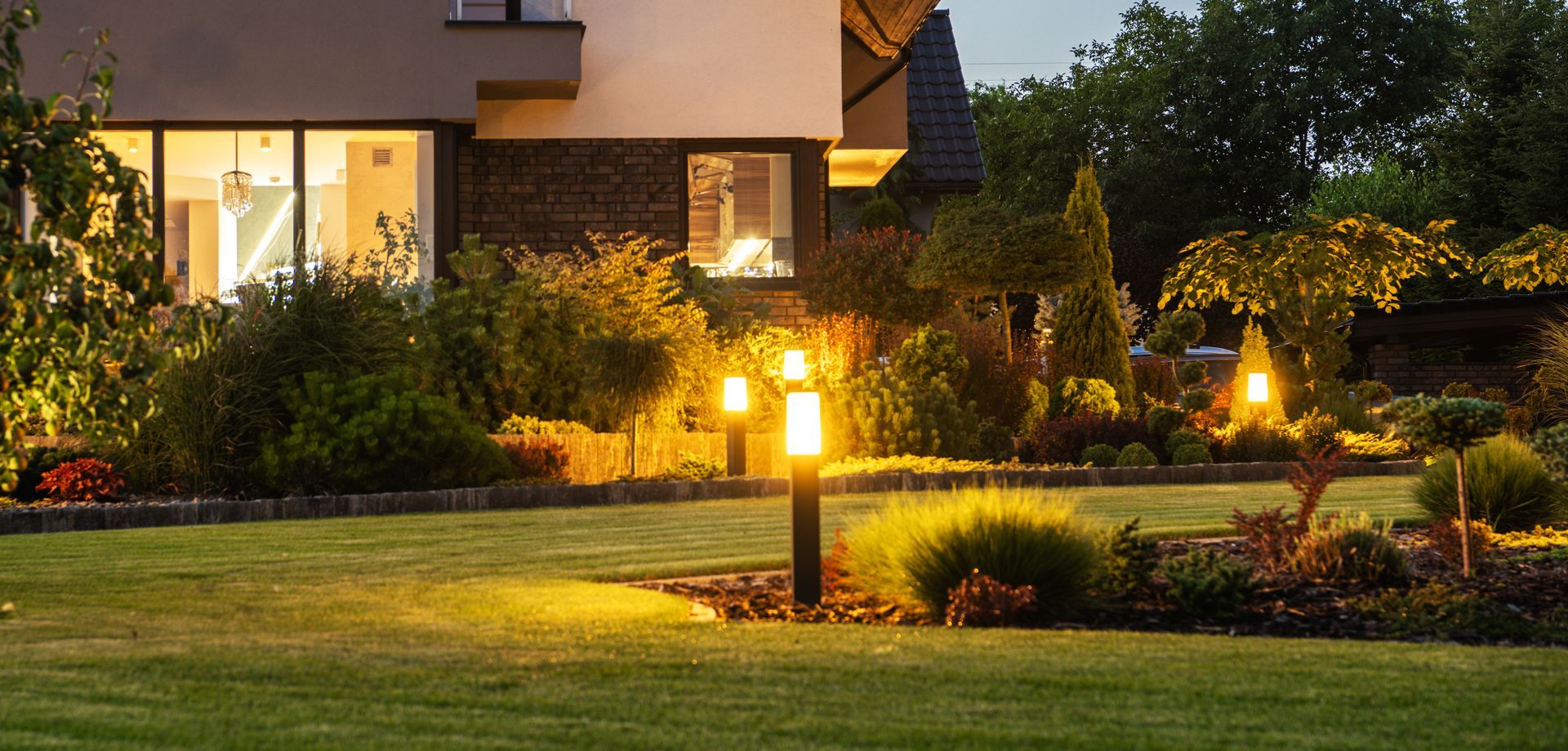
Landscape lighting is one of the few outdoor upgrades that pays off in several ways at once. Done well, it makes your property safer to move around at night, more secure against intruders, and far more striking from the street, while letting you actually use your patio and yard after dark. In a state like Connecticut, where the sun sets early for much of the year, good lighting turns a yard that disappears at dusk into a space you enjoy year-round.
At OBEE Landscaping & Outdoor Design, we design and build outdoor living spaces across Central Connecticut, and lighting is part of how we tie a landscape together. As a licensed and insured, family-owned company based in Rocky Hill since 2017 (HIC-0650801), we look at lighting as one piece of a well-planned yard, so this guide reflects how it fits into a real outdoor space rather than a catalog of fixtures.
In This Guide
- Safety After Dark: Fewer trips and falls.
- Security and Deterrence: A less inviting target.
- Curb Appeal and Value: Looking great at night.
- More Usable Outdoor Space: Longer evenings outside.
- Common Types of Landscape Lighting: Techniques and fixtures.
- Lighting and Connecticut's Seasons: Year-round value.
- Planning It Right: Getting the design to work.
- Frequently Asked Questions: Quick answers.
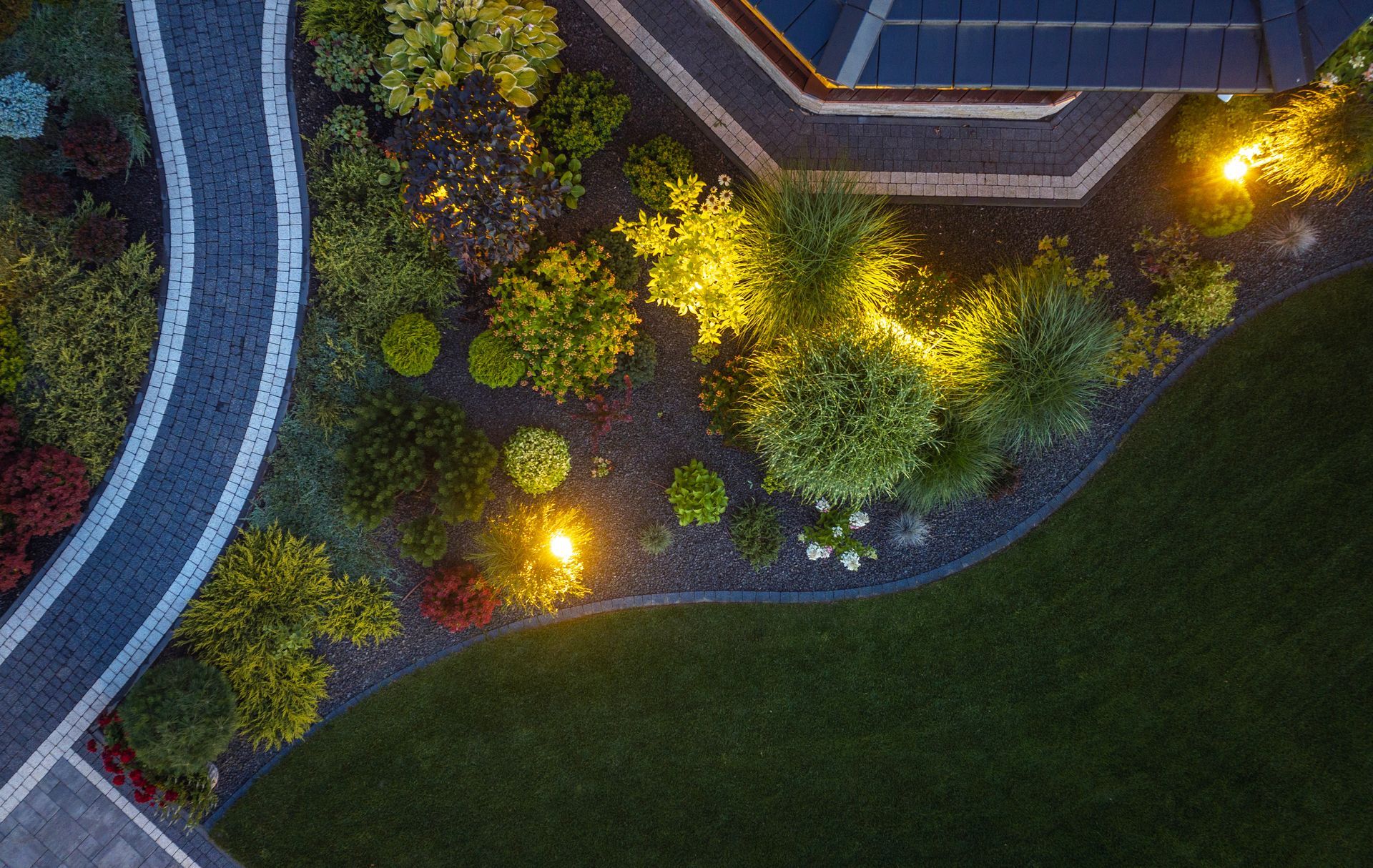
Safety After Dark
The most practical benefit of landscape lighting is simple: it helps people move around your property without tripping, slipping, or stumbling in the dark. This matters more in Connecticut than many homeowners realize, because our winter evenings arrive early and often bring ice and snow.
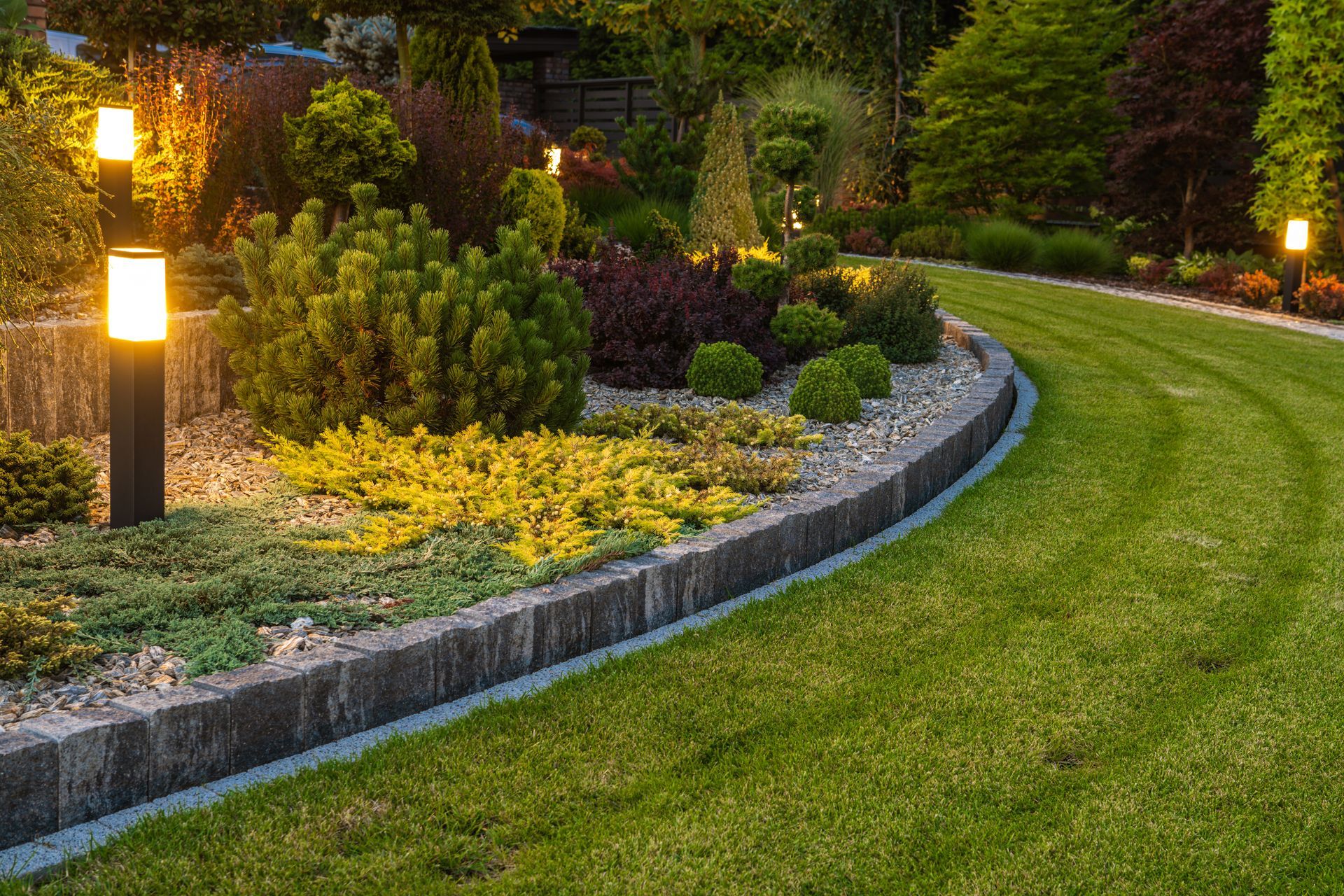
Dark walkways, steps, and driveways are where most nighttime accidents happen, and a few well-placed lights remove that risk. Path lights along walkways and garden trails guide people safely, while lighting at steps and entrances marks the changes in elevation that cause falls. This is especially valuable for households with children, older adults, or frequent guests, who all benefit from being able to see where they are going. When you add in the icy, slushy conditions of a Connecticut winter, illuminating the routes people actually walk becomes a genuine safety measure, not just a nicety.
It is worth thinking about the specific spots on your property where a misstep is most likely. The transition from a driveway to a walkway, the first and last step of any staircase, a change in paving material, and the stretch from where guests park to your front door are all places where people commit to moving in the dark and where a light makes the biggest difference. Lighting those decision points, rather than simply flooding the whole yard, is both safer and more pleasant to look at. That kind of targeted, purposeful placement is the difference between lighting that genuinely prevents accidents and lighting that just adds glare.
Security and Deterrence
Beyond preventing accidents, landscape lighting makes your home a less appealing target, because intruders rely on darkness and the cover it provides. A property that is well lit at night signals that someone is paying attention.
Criminals tend to avoid areas where they can be easily seen, so eliminating the dark corners and shadowed spots around a house removes the hiding places they prefer. Lighting near entry points, along the sides of the house, and around gates increases visibility exactly where it matters. Motion-activated fixtures add another layer, since a sudden burst of light draws attention and can startle anyone who should not be there. The goal is not to flood the property with harsh light, which is unpleasant and rarely necessary, but to use a balanced design that removes the shadows an intruder would count on while keeping the look warm and inviting.
Curb Appeal and Value
Landscape lighting transforms how a home looks after sunset, and that visual impact is often what draws homeowners to it in the first place. A property that vanishes into darkness at night looks completely different when it is thoughtfully lit.
By highlighting the features that make a home distinctive, its architecture, mature trees, stonework, and garden beds, lighting creates depth, drama, and a strong impression from the street. Features that disappear at night come back to life, and the whole property reads as polished and cared for. That first impression matters for everyday pride of ownership and can also support resale value, since a home that looks striking after dark stands out to buyers. Because so much of a home's exterior is only seen at night for half the year in Connecticut, lighting effectively doubles the hours your landscape investment is on display.
There is also a layering effect that makes a lit landscape feel richer than a daytime view. During the day, the eye takes in everything at once, but at night lighting lets you decide what to emphasize and what to leave in shadow, creating a curated, gallery-like look that a flat daytime yard cannot match. A single uplit specimen tree or a softly grazed stone wall can become the focal point of the whole front yard. That control over what the eye sees is a big part of why professionally lit homes look so much more refined after dark than the same homes look at noon.
More Usable Outdoor Space
One of the most underrated benefits of landscape lighting is that it extends how long you can actually use your outdoor spaces, turning a yard that shuts down at sunset into one you enjoy well into the evening. This is where lighting connects directly to outdoor living.
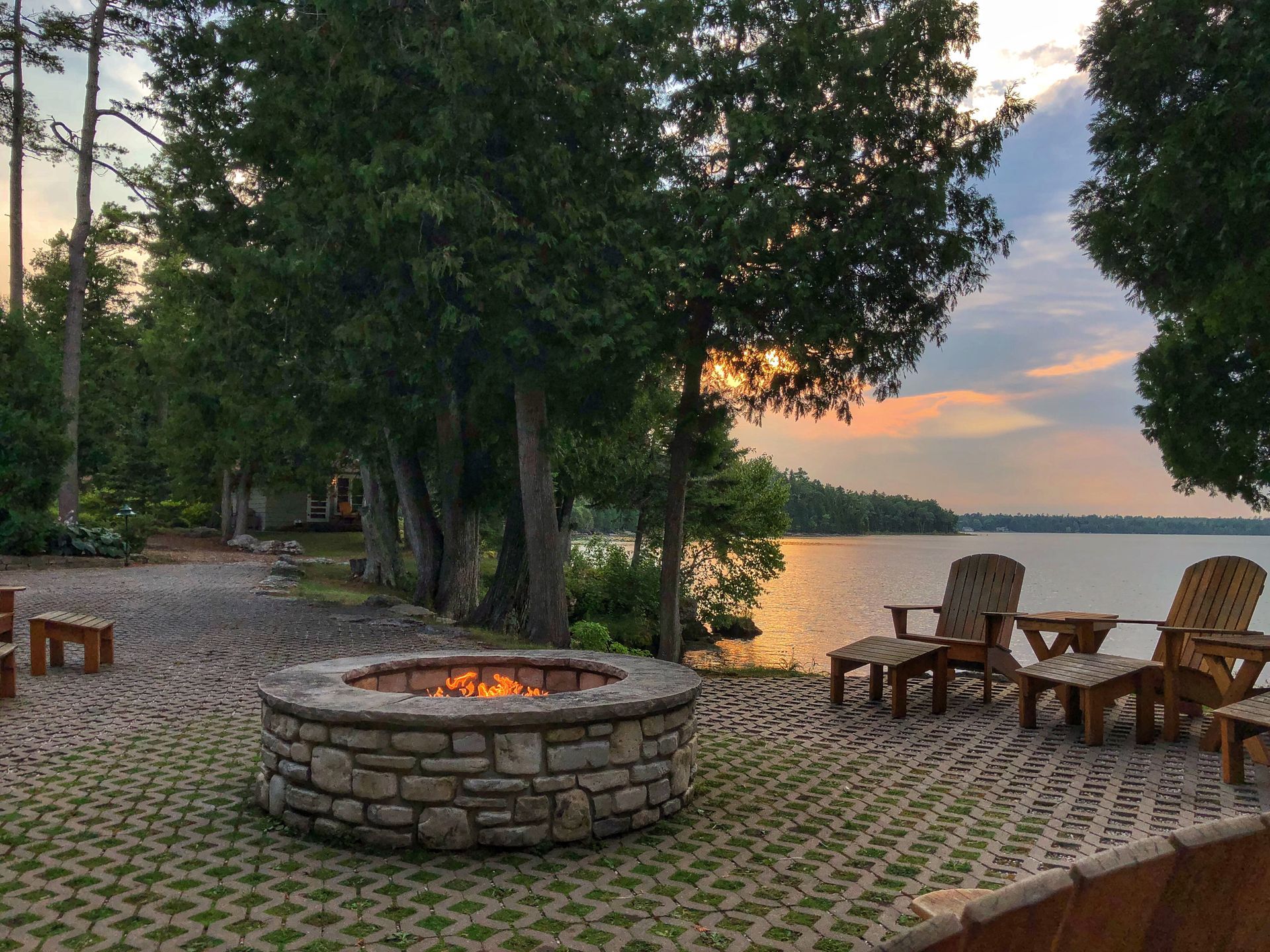
A patio, fire pit, or seating area is far less useful in the dark, and without lighting these spaces often go unused once the sun goes down. Soft, well-placed lighting around seating zones, outdoor kitchens, and gathering areas makes them comfortable and inviting after dark, so you get more hours out of the investment you made in them. This is exactly why lighting works best when it is planned alongside hardscaping like patios, walls, and outdoor kitchens rather than added as an afterthought. When the lighting and the living space are designed together, the whole area functions as one cohesive outdoor room. Our
hardscaping and
landscape design work is built around exactly that kind of integrated outdoor living.
Common Types of Landscape Lighting
Understanding the basic lighting techniques helps you picture what is possible and communicate what you want, because the effect depends far more on technique than on the fixture itself. A good design usually combines several of these.
- Path lighting lines walkways and garden paths for safe navigation and a welcoming glow.
- Uplighting places fixtures low and aims them upward to dramatize trees, columns, and textured walls.
- Downlighting, or moonlighting, mounts lights high to cast a soft, natural glow that mimics moonlight.
- Accent and spotlighting draws the eye to a specific feature like a specimen tree, fountain, or sculpture.
- Step and deck lighting marks changes in level on stairs, patios, and seating walls for safety and effect.
Most projects also use energy-efficient LED fixtures, which last longer and use far less power than older options, making a well-lit landscape more affordable to run than it used to be. The art is in combining these techniques so the result feels balanced and intentional rather than scattered.
| Technique | What It Does | Best Used For |
|---|---|---|
| Path lighting | Lights walkways at ground level | Safe navigation and welcome |
| Uplighting | Aims light upward at a feature | Trees, columns, textured walls |
| Downlighting | Casts a soft glow from above | Ambient, moonlight-style effect |
Lighting and Connecticut's Seasons
Landscape lighting earns its keep in every season here, and Connecticut's long stretch of early sunsets is exactly why it delivers more value locally than it might in a sunnier climate. Thinking through the year makes the case clear.
In the depths of a Connecticut winter, the sun can set before many people even leave work, which means your property spends most of its waking hours in the dark. Lighting that marks icy walkways and steps is a genuine safety feature in those months, not just a decorative one, and a well-lit exterior keeps the home looking cared for through the long, gray season. In spring and summer, the same system shifts to extending your evenings outdoors, letting you use the patio and yard well past sunset when the weather is finally cooperating. In fall, lighting carries you through the early-darkening evenings and shows off the landscape as it changes. A quality LED system handles our temperature swings, moisture, and freeze-thaw cycles without trouble, so once it is installed correctly it simply works, season after season. That year-round usefulness is a big part of why lighting is one of the better values in an outdoor project here.
Planning It Right
A great lighting result comes from a thoughtful plan, not just buying fixtures and scattering them around, which is why the design stage matters so much. The difference between lighting that looks magical and lighting that looks harsh or haphazard is entirely in the planning.
A good plan starts with your goals, whether safety, security, beauty, or extending your outdoor living, and layers the techniques to serve them without over-lighting the property. It accounts for how the yard is actually used, where people walk, and which features deserve attention, then balances brightness so the effect is warm rather than glaring. Fixture placement, wiring, and transformer sizing all matter for a system that works reliably and looks clean. Because a landscape lighting design is genuinely a specialized skill, it is an area where working with an experienced outdoor design team pays off, particularly when the lighting is planned as part of a larger landscape or hardscape project rather than bolted on later.
Light Up Your Outdoor Space With OBEE Landscaping
Landscape lighting delivers safety, security, curb appeal, and more usable evenings all at once, and it works best when designed as part of a cohesive outdoor space. For landscape and outdoor living design across Central Connecticut, OBEE Landscaping is ready to help.
Call OBEE Landscaping at (860) 490-0852 or
contact us online for a free estimate. Serving Rocky Hill and Central CT. Explore our
landscape design and
hardscaping services.
Frequently Asked Questions
What are the main benefits of landscape lighting?
Landscape lighting improves safety by illuminating walkways and steps, boosts security by removing the dark spots intruders rely on, enhances curb appeal by highlighting your home's best features at night, and extends how long you can use patios and outdoor spaces after dark. Few outdoor upgrades deliver that many benefits at once.
Does landscape lighting really improve home security?
It helps. Intruders prefer darkness and cover, so a well-lit property with no easy hiding places is a less attractive target. Lighting near entrances, along the sides of the house, and around gates increases visibility where it matters, and motion-activated fixtures add an extra deterrent by drawing attention to any movement.
Is landscape lighting worth the cost?
For most homeowners, yes. It delivers safety, security, curb appeal, and more usable outdoor hours from a single investment, and modern LED fixtures keep running costs low. Because it makes your landscape and outdoor living areas usable after dark, especially through Connecticut's long, early evenings, it extends the value of everything else in your yard.
What types of landscape lighting are there?
Common techniques include path lighting for walkways, uplighting to dramatize trees and architecture, downlighting or moonlighting for a soft natural glow, accent lighting to highlight specific features, and step or deck lighting for safety on stairs and patios. Most designs combine several techniques, typically using energy-efficient LED fixtures.
Should I install landscape lighting myself or hire a professional?
Simple plug-in or solar path lights are a reasonable do-it-yourself project, but a full landscape lighting design involves technique, fixture placement, wiring, and transformer sizing that benefit from professional experience. A pro balances brightness, avoids glare, and integrates the lighting with your overall landscape, which is what separates a striking result from a harsh or patchy one.
Request an Estimate
For more information about our services or to schedule an estimate, call us at (860) 490-0852 or complete the form.
Request an Estimate
For more information about our services or to schedule an estimate, call us at (860) 490-0852 or complete the form.
Latest Posts