Retaining Wall vs. Slope Grading: Which Fixes Yard Erosion Better?
June 15, 2026
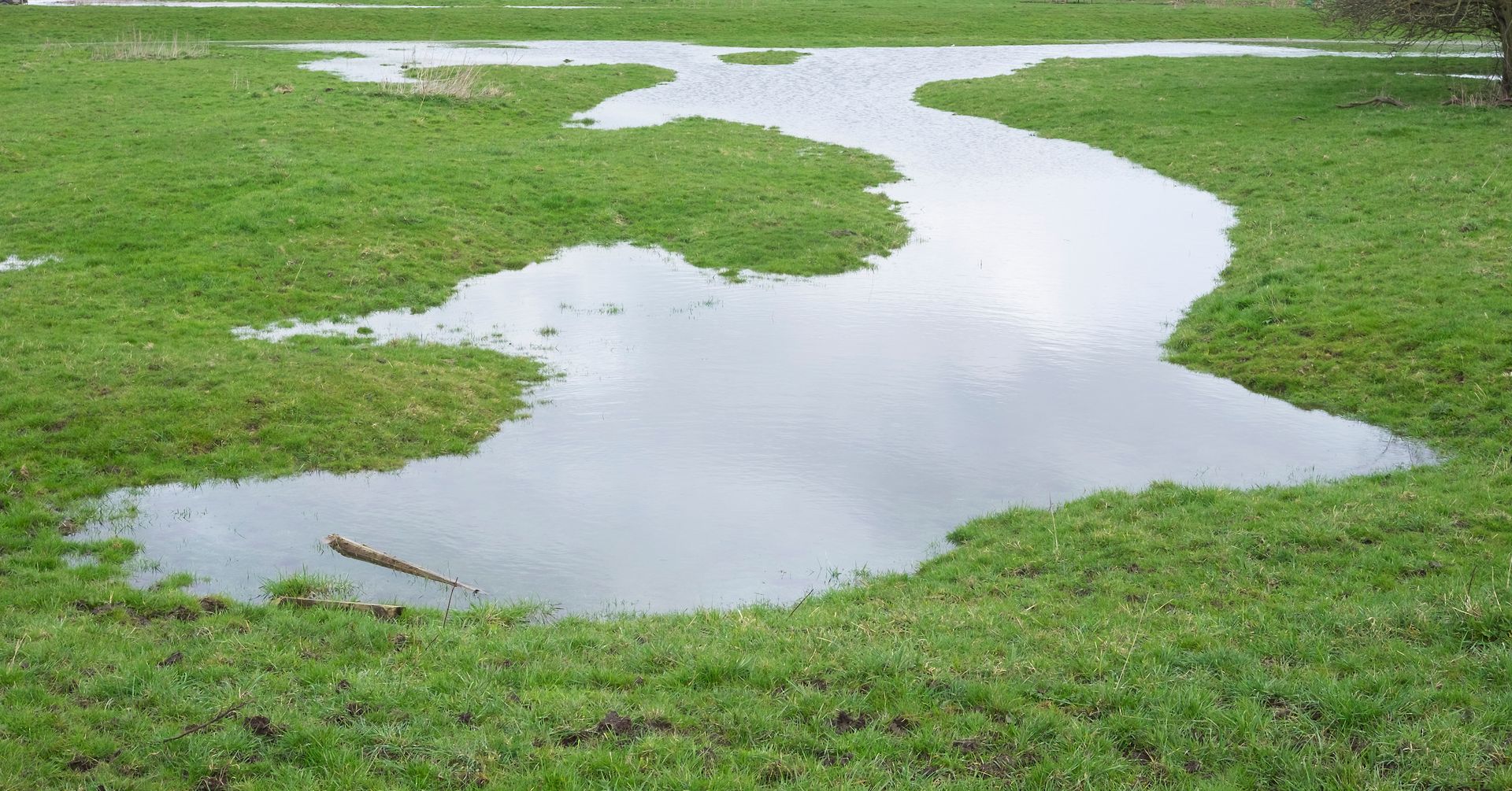
Sloped yards in Connecticut tend to fail the same way. Heavy spring rain washes mulch downhill, the lawn thins at the top of the slope and turns muddy at the bottom, water collects against the foundation, and the homeowner ends up with two questions: do I regrade the slope, or do I build a retaining wall? The honest answer depends on slope angle, what you want to do with the space, the soil and drainage situation, and budget. Our crew at OBEE Landscaping handles both regrading and retaining wall installation across Wethersfield, Glastonbury, Portland, Middletown, Cromwell, and the rest of Hartford County. This guide breaks down when each approach is the right fix, when you need both, what the real cost difference looks like, and where Connecticut code and permits come into play.
The Short Answer
Grading works for gentler slopes (roughly 3:1 or shallower, meaning the slope rises one foot for every three feet of horizontal distance) where the goal is to manage drainage and reduce erosion without changing the basic shape of the yard. Retaining walls are the right answer when the slope is steeper than 3:1, when you want flat usable space carved out of the hillside, when the slope is causing structural concerns near the house or driveway, or when grading alone would require removing too much soil or trees. Many real sites need both: a wall to hold the steep section and regrading to manage drainage above and below it.
What Slope Grading Actually Does
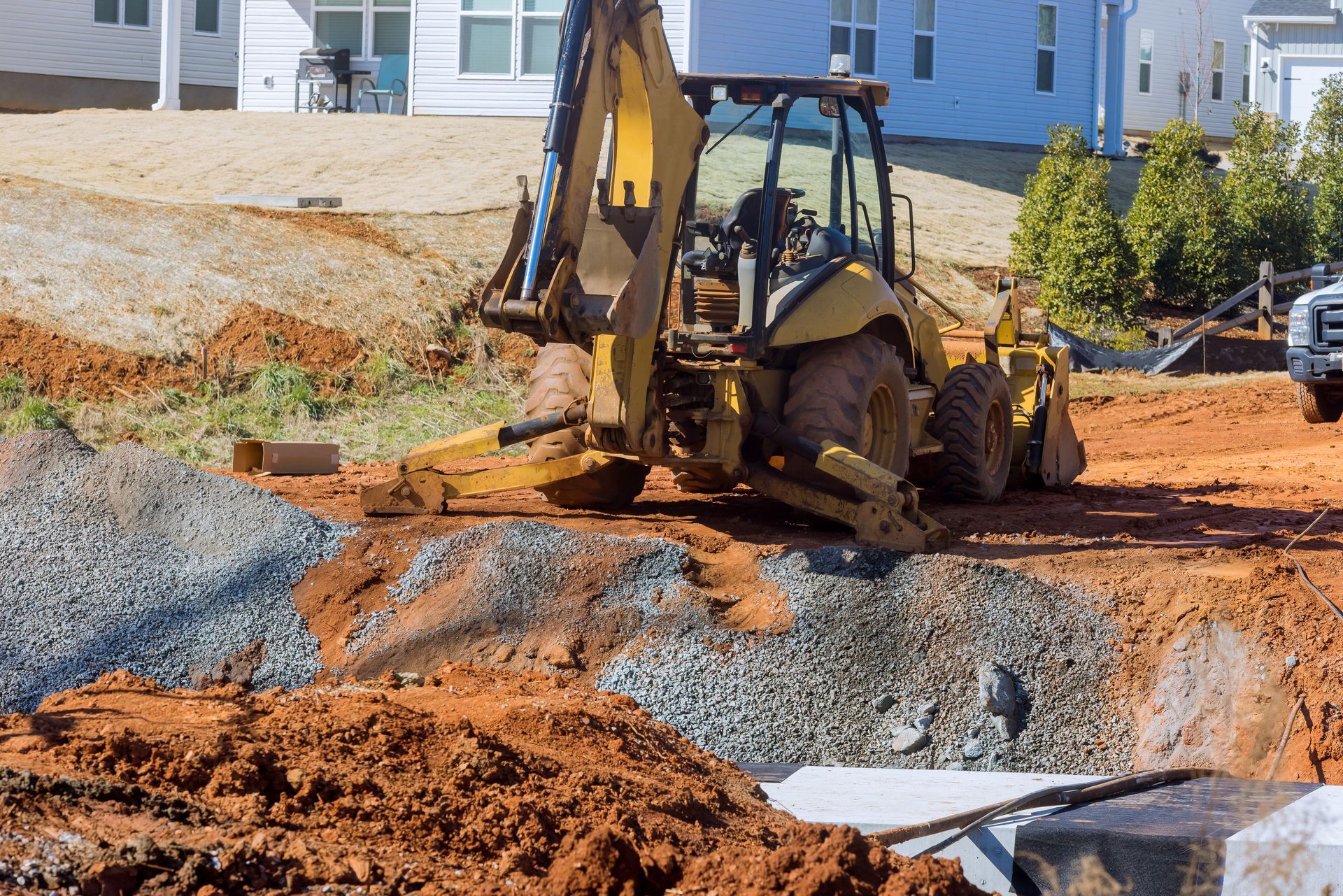
Regrading is the process of reshaping the soil profile to manage water flow and reduce erosion. The crew strips topsoil from the slope, reshapes the underlying soil into a gentler grade (or into specific shapes like swales that channel water away from the house), then replaces topsoil and seeds or sods the surface. Done well, the yard ends up with a softer slope, predictable water flow, and a stable surface that holds plant material.
The advantages are mostly economic and visual. Grading is significantly cheaper than wall construction, it produces a natural look without hard edges, and it can usually be completed in a few days for a typical residential slope. Drainage gets integrated into the grade as part of the design, often with drainage and irrigation systems installed in low points to handle the water the slope will now shed faster.
The limitation is real: grading does not give you new flat usable space. If the original yard sloped from the back of the house down to the property line, the regraded yard still slopes from the back of the house down to the property line, just more gently. If the goal is a flat patio, a level lawn area, or any carved-out usable space, grading alone will not get you there.
What a Retaining Wall Does
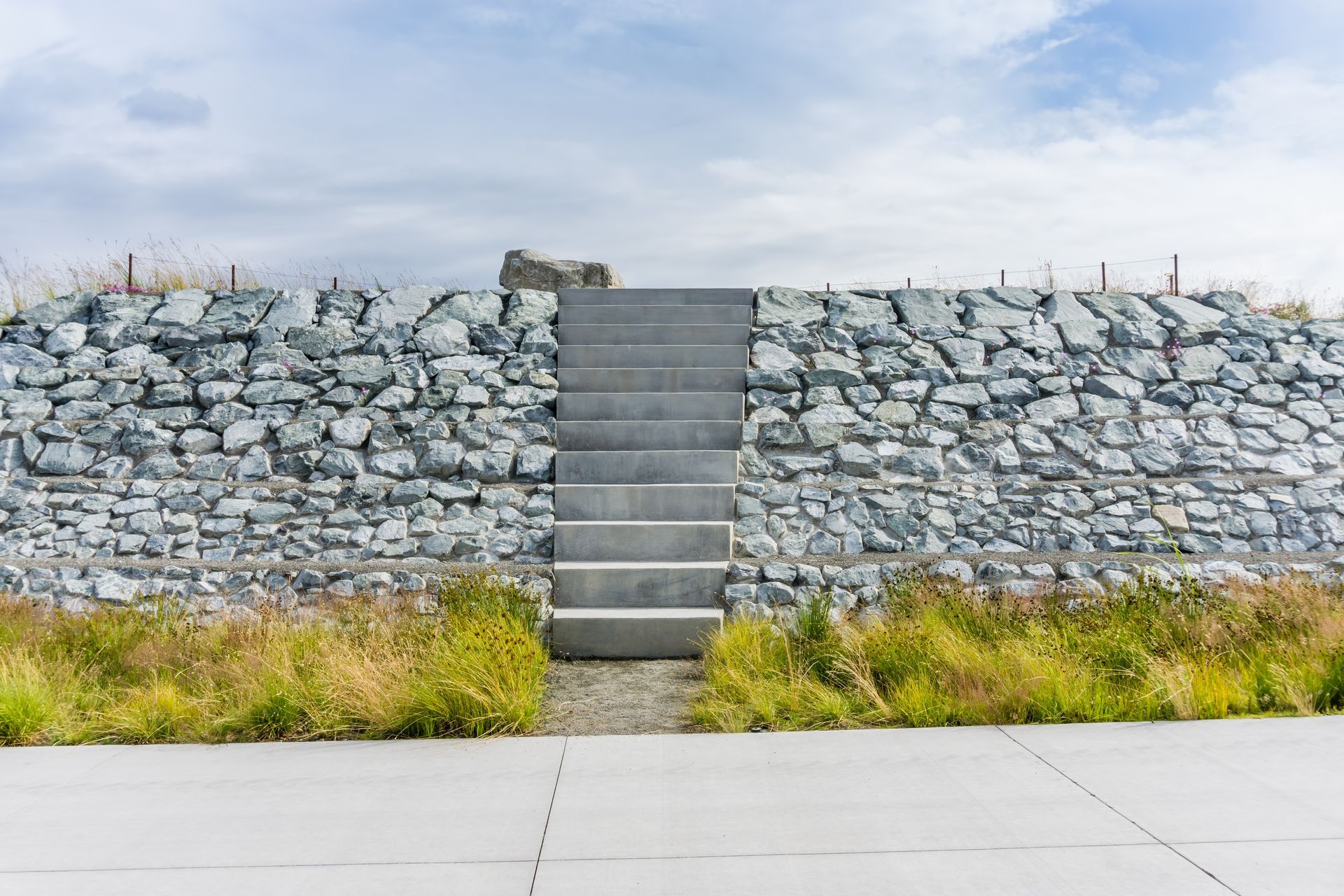
A retaining wall holds back soil at a steeper angle than the soil would hold on its own. The wall creates a vertical (or near-vertical) face between two elevations, effectively turning a steep slope into a flat upper section and a flat lower section with a wall in between. That flat upper section is what makes walls valuable: it is usable space that did not exist before.
The practical case for a retaining wall is when the slope is steeper than grading can fix, when the homeowner wants new flat usable space carved into the hillside, when the slope is threatening structures (house foundation, driveway, septic field), or when the property does not have room for the gentler grade that regrading would require. A wall makes a 6-foot drop happen in a 1-foot horizontal distance instead of the 18 feet a 3:1 regrade would need.
The trade-off is cost and complexity. Walls are significantly more expensive than grading, they require proper drainage behind them (or they fail within a few years), and walls above a certain height require engineered design and permits in most Connecticut towns. The wall material you choose also affects price, lifespan, and how the finished project looks, which is the next decision to think through.
Retaining Wall Materials Compared
Once a wall is on the table, the next question is what to build it from. The five materials we install or repair across central Connecticut each have a real use case; choosing wrong leads to either overspending or a wall that does not last in this climate.
Segmental concrete block is the most common residential choice in Connecticut. The blocks (Allan Block, Versa-Lok, Techo-Bloc, Anchor) interlock without mortar, install fast, and handle freeze-thaw well when built with proper drainage and geogrid reinforcement. The trade-off is aesthetic: the look is uniform and modular, which suits modern landscapes but reads as "concrete" rather than "natural."
Natural stone (fieldstone, granite, or quarried) gives the most traditional Connecticut look. Built well by a qualified mason, these walls often outlive the house and integrate beautifully with established landscape. The downsides are cost and the difficulty of finding masons who still build dry-stacked stone correctly.
Poured concrete is strongest and longest-lasting but rare in residential landscaping because it requires forms, rebar, and engineered detailing. The aesthetic is rigid and modern. Typically used for tall walls (over 6 feet) where engineering requirements push the project past what segmental block can do economically.
Pressure-treated timber is the budget option, which is why DIY homeowners reach for it. The problem is lifespan: even pressure-treated timber walls in Connecticut typically rot and need replacement well before block or stone walls would. Works for small terraces under 4 feet where the homeowner is comfortable rebuilding in two decades.
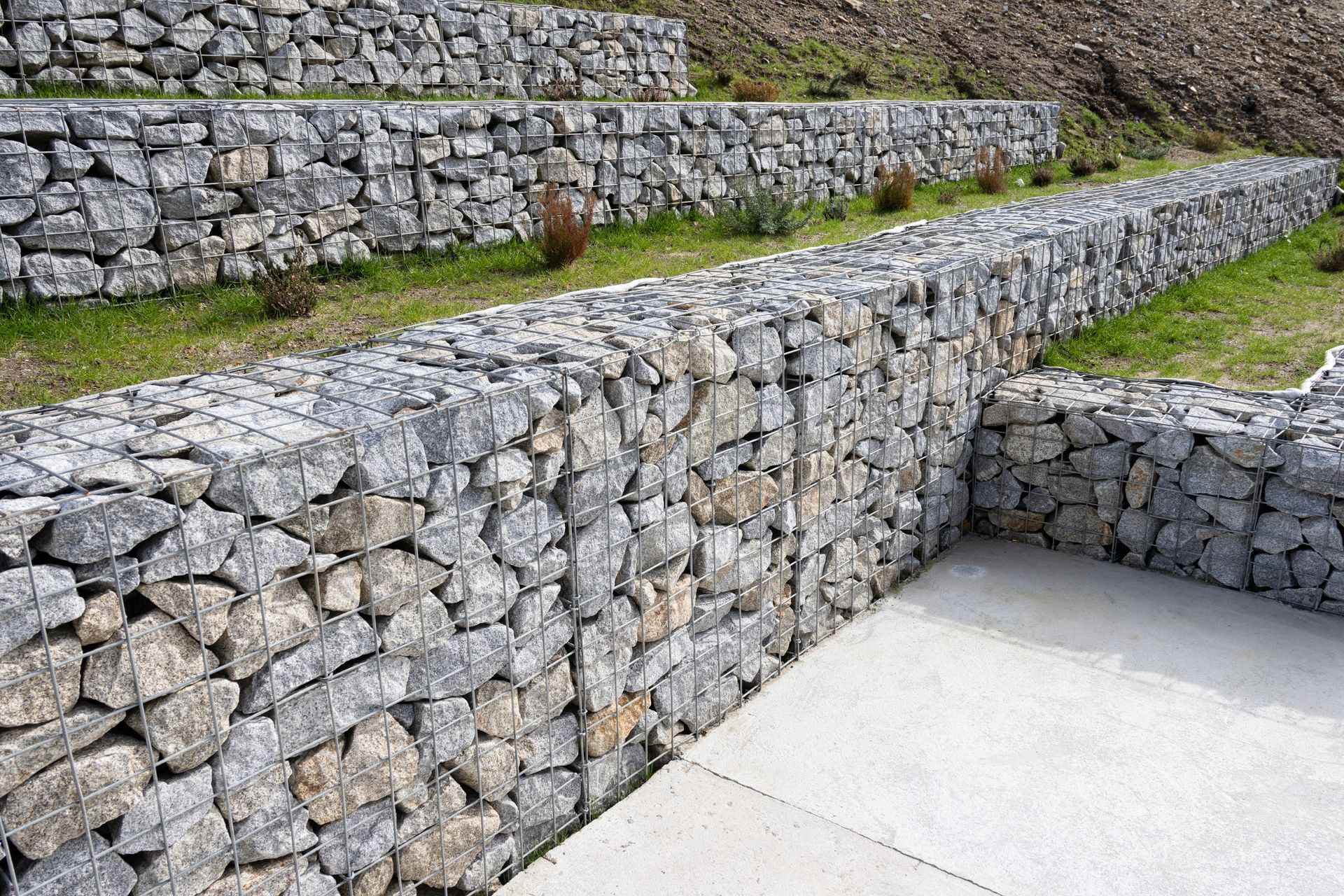
Gabion walls (galvanized wire baskets filled with stone) drain freely (no separate drainage detailing needed), handle ground movement well, and last 50+ years. The look is industrial-natural, which works for contemporary landscapes and clashes with traditional ones.
| Material | Cost / Face Foot | Lifespan | Best Use Case | Trade-Off |
|---|---|---|---|---|
| Segmental block | $35 to $60 | 25 to 50 yrs | Standard residential, fast install | Uniform modern look |
| Natural stone (dry-stack) | $65 to $100 | 50+ yrs | Traditional CT aesthetics | High cost, mason availability |
| Natural stone (mortared) | $90 to $150 | 50+ yrs | Premium historic properties | Highest cost tier |
| Poured concrete | $75 to $120 | 50+ yrs | Tall walls, max strength | Rigid look, forms required |
| Pressure-treated timber | $25 to $40 | 15 to 25 yrs | Small terraces under 4ft | Shortest lifespan |
| Gabion | $40 to $70 | 50+ yrs | Wet sites, contemporary look | Industrial aesthetic |
For most central Connecticut homeowners building a residential wall in the 3 to 6 foot range, segmental block hits the right balance of cost, install speed, and durability. Natural stone is the upgrade if budget allows. Timber, concrete, and gabion are situational.
How to Tell Which Your Yard Actually Needs
The right approach depends on a small set of measurable factors. Walk the slope with these in mind before talking to any contractor:
- Slope angle (the single most important measurement, covered in detail below)
- Erosion patterns (washouts, exposed roots, vanishing mulch, gullies)
- What you want to use the space for (just stabilization vs. flat usable area)
- Drainage situation (free-draining sandy soil vs. clay or seeps)
- Proximity to structures (house foundation, driveway, septic field)
- Tree cover and root systems (mature trees limit grading depth)
The slope angle is the single most useful starting measurement. To check yours, set a 4-foot level horizontally on the slope and measure how far the low end is above the ground. A difference of 16 inches over 4 feet is a 1:3 slope (steep enough to start considering a wall). A difference of 12 inches over 4 feet is 1:4 (regrading territory). A difference of 8 inches over 4 feet is 1:6 (definitely grade, no wall needed). Most residential yards that feel "steep" are actually in the 1:4 to 1:3 range, which is the range where the right answer depends on the rest of the situation.
Erosion patterns tell you whether the existing slope is stable. Visible washouts, exposed roots, mulch that disappears after every rain, or gullies cutting across the slope mean the current grade is failing. Sometimes the answer is improving the grade so water flows differently; sometimes the answer is a wall that stops the soil from moving in the first place. Our breakdown of yard drainage problem signs covers the visible signals that something is wrong before you decide which fix.
What you want to do with the space matters as much as the slope. If you want a flat patio or a level lawn area, you need a wall. If you just want the existing slope to look better and stop eroding, grading might be enough. If you want both a patio and a stable lawn, you may need a wall for the patio area and grading for the lawn area, working together.
Drainage situation is the final factor. Steep slopes that drain freely (sandy soils, fast water shedding) often handle regrading well. Slopes with high water tables, clay soils, or natural seeps usually need walls with proper drainage detailing because regrading alone cannot solve the water problem.
| Slope Angle | Goal | Recommended Approach |
|---|---|---|
| 1:5 or gentler | Stabilize, improve drainage | Regrading alone |
| 1:4 to 1:3 | Stabilize, improve drainage | Regrading with erosion control |
| 1:3 to 1:2 | Stabilize | Retaining wall or tiered walls |
| 1:2 or steeper | Stabilize or create flat space | Engineered retaining wall |
| Any slope | Create new flat usable space | Retaining wall (any height) |
| Steep + drainage issues | Stabilize + manage water | Wall + regrading combo |
Cost Comparison in Connecticut
Real cost ranges in the central Connecticut market vary by site, but typical pricing looks like this:
| Approach | Typical Range | What's Included |
|---|---|---|
| Slope regrading (modest residential) | $1,500 to $5,000 | Topsoil strip, regrade, replacement topsoil, seed or sod |
| Slope regrading with drainage | $3,000 to $10,000 | Add French drain, swales, or downspout extension |
| Retaining wall (under 4 ft, segmental block) | $25 to $40 per face foot | Wall, drainage gravel, geogrid as needed |
| Retaining wall (4 to 6 ft, engineered) | $35 to $55 per face foot | Above plus engineered design and permit |
| Tiered wall system | $40 to $70 per face foot | Multiple shorter walls reducing the engineering threshold |
| Combination wall + regrade project | $8,000 to $30,000+ | Both approaches integrated for complex sites |
The face foot measurement (length times height of the wall) is the standard pricing unit for retaining walls. A wall 20 feet long and 3 feet high is 60 face feet, which at $30 per face foot is $1,800 for the wall itself, before drainage, backfill, capstones, or any landscaping integration. Total installed costs run higher than the face-foot price suggests once everything is included.
Permits and Engineering Requirements in Connecticut
Connecticut has no statewide retaining wall permit rule. Requirements vary by town and by wall height. The general pattern across central Connecticut towns:
- Walls under 4 feet in total height (measured from the bottom of the wall to the top of the cap) usually do not require a permit and can be built by a qualified contractor without engineering
- Walls 4 to 8 feet typically require a building permit and a stamped engineered design
- Walls over 8 feet require engineering by a licensed Connecticut professional engineer and are often subject to additional inspections
- Tiered wall systems sometimes let homeowners avoid the engineering threshold by keeping each individual wall under 4 feet, but most building departments require the tiers be separated by enough horizontal distance to function as independent walls
Every Connecticut town handles this slightly differently. Wethersfield, Newington, and Glastonbury have their own building department procedures and inspection schedules. Reputable contractors handle the permit process as part of the project scope; if a contractor proposes building a 5-foot wall with no permit and no engineer, that is the moment to walk away.
When You Actually Need Both
Most complex sloped sites we work on need a combination: a retaining wall (or tiered walls) holds the steepest section creating a flat zone for a patio or lawn, the upper slope gets regraded to drain water away from the wall instead of dumping it on top, and the lower section gets regraded to route the water the wall sheds to wherever the property's drainage exits. Treating wall and grading as one integrated project avoids the failure mode where a wall is built without addressing the slope above it, which then sends water and soil pressure into the wall and shortens its life. For sites with significant slope and aesthetic priorities, landscape design helps integrate the wall, regrade, and planting plan into a single coherent project.
Alternatives Between Grading and a Full Wall
The "wall vs. grading" framing leaves out a middle band of solutions that handle a lot of central Connecticut slopes for less money than a wall and with more capability than regrading alone.
French drains ($25 to $80 per linear foot) solve subsurface water without changing the slope's grade. A perforated pipe in a gravel-filled trench, wrapped in filter fabric, intercepts groundwater and redirects it to a daylight outlet or dry well. Right answer when the slope is stable but soil stays wet or basement seepage is the underlying complaint.
Dry creek beds ($20 to $50 per linear foot) are decorative stone-lined channels that handle visible surface runoff while looking like an intentional landscape feature. Work on moderate slopes where runoff is concentrated and the homeowner wants drainage to look like part of the garden rather than utility infrastructure.
Terracing with native plantings combines short walls (under 4 feet, no permit needed) with deep-rooted natives between them. Switchgrass, little bluestem, native serviceberry, and similar species hold soil with roots reaching 4 to 8 feet deep, doing much of the structural work that a taller wall would otherwise have to do alone.
Erosion control matting ($1 to $3 per square foot) buys time for vegetation to establish on moderate slopes that would otherwise wash out before grass roots take hold. A tool used in conjunction with regrading and seeding, not a standalone solution.
Riprap ($30 to $60 per square foot) handles concentrated water flow paths like drainage swales or slope toes where runoff velocity would scour vegetation off a slope. Industrial look that only fits certain properties.
The honest version of the wall-versus-grading question is often "which combination of these tools fits this slope?" rather than a binary choice. A site might use a 3-foot segmental wall plus regrading above it plus a french drain behind the wall, routing discharge to a dry creek bed at the property edge.
Long-Term Maintenance
Regraded slopes need minimal maintenance once the grass or planting cover is established. Reseeding any thin spots, inspecting drainage outlets annually, and checking for new erosion after major rain events covers most of it. A well-graded slope can last decades without intervention if the original drainage plan was right.
Retaining walls require more attention, but the level depends heavily on the material and the original construction. Segmental block walls built with proper drainage behind them and geogrid reinforcement where needed last 25 to 50 years with minimal maintenance. Walls built without drainage fail much sooner: water builds up behind the wall, freezes, expands, and tips the wall outward over time. The most common cause of failed walls in Connecticut is missed or inadequate drainage during the original install.
Inspect your wall annually for these warning signs of trouble:
- Tipping or leaning outward at the top of the wall
- Cracks in individual blocks or across multiple courses
- New gaps between blocks that were tight when installed
- Bulging in the middle section of the wall
- Water staining or efflorescence (white mineral deposits) on the wall face
- Wet spots or seepage at the base of the wall after rain
- Plant or weed growth between blocks where joints have opened
Catching any of these early often means a localized repair instead of a full rebuild. Ignoring them tends to accelerate the failure.
Get an Assessment for Your Sloped Yard in Central Connecticut
The right approach for your specific yard depends on slope angle, soil conditions, drainage, usable-space goals, and budget. The only way to figure out which combination of grading, retaining wall, and drainage makes sense is to walk the site with someone who installs both regularly.
Use our
contact form to schedule a free on-site evaluation anywhere in the Wethersfield, Cromwell, Newington, Berlin, Glastonbury, Portland, or Middletown service area. We will walk the slope, measure the grade, talk through what you want the space to do, and give you a written quote with the recommended approach broken out by line item. For projects that combine walls with regrade and drainage work, the
hardscape services overview covers how the pieces integrate into one coherent project.
Frequently Asked Questions

When do I actually need a retaining wall instead of regrading?
You need a wall when the slope is steeper than about 3:1, when you want to create new flat usable space, when the slope is threatening a structure or driveway, or when there is not enough room to regrade to a gentler slope. If the slope is gentle and the goal is just better drainage and less erosion, regrading alone usually works.
How much cheaper is grading than building a retaining wall?
For comparable problem areas, regrading typically costs 30 to 70 percent less than wall construction. A modest residential regrade runs $1,500 to $5,000; a comparable retaining wall on the same area can be $5,000 to $20,000 or more. The catch is that they do different things, so the cost comparison only matters when both approaches would actually solve the problem.
Can I just terrace the slope instead of building one tall wall?
Yes, terracing (a series of shorter walls stepped up the slope) is often a smart approach because it can keep individual walls under the 4-foot engineering threshold, breaks the visual mass of a single tall wall, and creates multiple usable planting zones. The terraces have to be spaced far enough apart that they function as independent walls; closely stacked terraces get treated as one tall wall for permit and structural purposes.
Request an Estimate
For more information about our services or to schedule an estimate, call us at (860) 490-0852 or complete the form.
Request an Estimate
For more information about our services or to schedule an estimate, call us at (860) 490-0852 or complete the form.
Latest Posts