What to Put Under a Paver Patio for Long-Term Performance
June 15, 2026
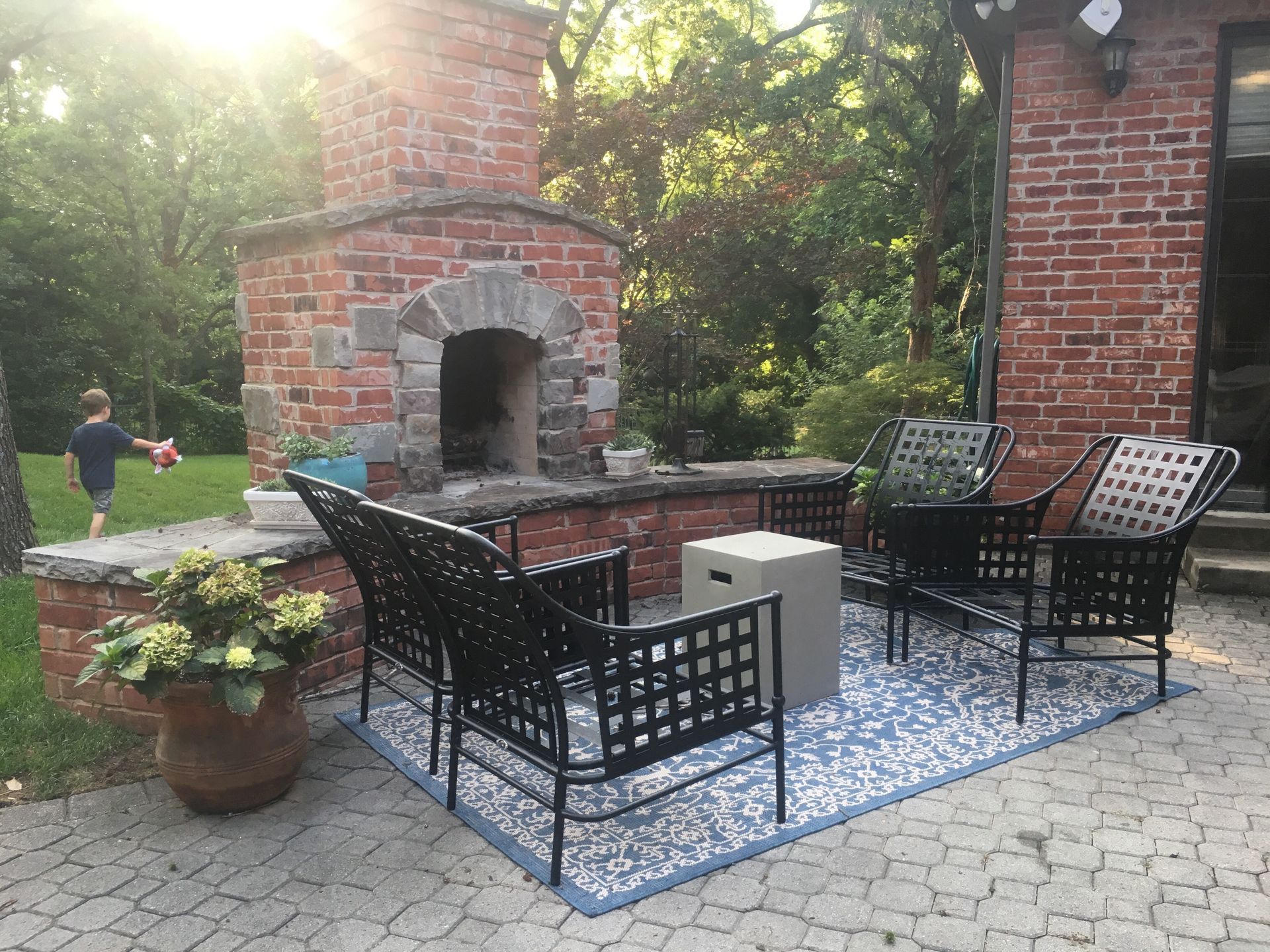
Most paver patio failures we get called to fix are not paver problems. They are base problems. A patio that sinks unevenly within three years, develops gaps at the joints, or tips toward the house after the first hard winter almost always traces back to what happened (or did not happen) below the surface before a single paver was set. Our crew at OBEE Landscaping installs paver patios across Wethersfield, Cromwell, Newington, Berlin, Glastonbury, Middletown, and the surrounding Hartford County towns, where freeze-thaw cycles and inconsistent soil profiles punish any shortcut taken on the base. This guide explains exactly what belongs under a paver patio, in what order, at what depth, and why each layer matters for the system to hold up for decades instead of seasons.
The Short Answer
A properly built residential paver patio in Connecticut needs four things under the pavers: a stable, compacted subgrade (with geotextile fabric if the soil is clay or unstable), 4 to 6 inches of compacted 3/4-inch minus crushed stone (called "processed gravel" or "dense grade" at most local yards), 1 inch of coarse concrete sand screeded smooth, and polymeric sand swept into the joints after the pavers are set. Each layer has a specific job, and skipping or substituting any of them is what causes most premature failures.
| Layer (top to bottom) | Material | Depth | Purpose |
|---|---|---|---|
| Joint sand | Polymeric sand | Fills joints | Locks pavers together, blocks weeds, sheds water |
| Pavers | Concrete or stone pavers | Typically 2 3/8 inch | Wear surface |
| Bedding sand | Coarse concrete sand (ASTM C-33) | 1 inch screeded | Allows fine paver leveling |
| Base | 3/4-inch minus crushed stone | 4 to 6 inches compacted | Load-bearing structural layer |
| Subgrade | Native soil, compacted | N/A | Foundation for everything above |
| Fabric (when needed) | Non-woven geotextile | Between soil and base | Separates layers, prevents migration |
Why the Base Matters More Than the Pavers
The pavers themselves are the most visible part of the patio, but they are also the easiest part to get right. A typical concrete paver from any reputable manufacturer is rated for thousands of PSI and will survive almost any abuse a backyard throws at it. What pavers cannot survive is movement underneath them. When the base settles unevenly, the joints open. When water gets into the open joints and freezes, the system pries itself apart. Within a few seasons the patio looks tired, even though every individual paver is fine.
In Connecticut specifically, the failure mode that does the most damage is frost heave. The ground freezes 30 to 48 inches deep in a typical Hartford County winter, and any water trapped in the soil or the base layer expands by about 9 percent when it freezes. If the base is the wrong material, too thin, or too compacted by the wrong method, that expansion lifts the patio unevenly. Multiply that by 10 to 20 freeze cycles per winter and the cumulative damage is what creates the lumpy, gapped patios you see on older properties.
The base is also where corner-cutting is invisible to the homeowner. A patio installed on 2 inches of base looks identical to one on 6 inches the day the job ends. The difference shows up two and three winters later, and by then the original contractor is hard to find.
Can You Put Pavers Directly on Dirt?
The short answer is no, not for any patio meant to last. Homeowners ask this regularly because they have seen pavers laid on bare ground hold their position for a season, and they wonder if all the layered base material is really necessary. It is, and the reasons show up by the second year.
A paver set directly on soil has nothing supporting it except the friction of the ground underneath. Within months, the soil compresses unevenly under foot traffic, individual pavers settle at different rates, and the joints between them open. Rain runs through the open joints into the soil below, which softens and accelerates the settling. Grass and weeds grow up through the joints because there is no compacted barrier between the soil and the surface. In Connecticut winters, the first freeze cycle drives water into the soil under the pavers and frost heave pushes random pavers up by 1 to 3 inches, leaving a patio that looks like it was hit by a small earthquake.
The exceptions are limited. Individual stepping stones spaced 18 to 24 inches apart in a lawn do not need a full base because they are not load-sharing with each other. Single-paver paths in low-traffic garden areas can sometimes survive on a thin sand-and-gravel pocket per stone. Neither of these is a patio, and neither is what most people mean when they ask the question.
For a real paver patio (any continuous surface of pavers meant for furniture, foot traffic, or outdoor living) the layered base is not optional. The rest of this guide covers exactly what that base looks like.
Excavation and Subgrade Prep
Excavation depth equals the total stack of everything that goes above the soil. For a standard residential patio with 2 3/8-inch pavers, 1 inch of bedding sand, and 5 inches of base, the dig depth is roughly 8 to 9 inches below the planned finish elevation. For driveway or heavy-load applications, base depth doubles and so does the dig.
The subgrade itself (the native soil at the bottom of the excavation) has to be stable. Around the Hartford River valley, that often means digging through 6 to 12 inches of organic topsoil before reaching the structural soil below. Topsoil compresses under load and is full of organic matter that decomposes over time, leaving voids. It cannot stay under a patio. Strip it off entirely and dispose of it, then verify that the subgrade beneath is firm and uniform. If the soil at that depth is still soft, dig further until you find competent material.
Geotextile fabric (specifically non-woven, not the woven landscape fabric sold for weed control) belongs over any subgrade that is clay-heavy, mixed with topsoil pockets, or shows obvious moisture variation. The fabric does not waterproof anything. What it does is keep the fine particles of the subgrade from migrating up into the base over time, which would otherwise weaken the structural layer. On sandy, well-drained subgrades the fabric is optional. On the clay pockets that show up around Newington, Wethersfield, and parts of Middletown, it is worth the extra step.
The Crushed Stone Base (The Most Important Layer)
The structural layer under the bedding sand is 3/4-inch minus crushed stone, which most Connecticut yards sell under the name "processed gravel," "dense grade," "DGA," or "3/4 inch minus." All four names describe the same material: angular crushed stone in a range of sizes from 3/4 inch down to fine dust, sold pre-mixed so the smaller particles fill the voids between the larger ones when compacted.
Three materials get confused with this one and they do not work in its place:
- Pea gravel is round, not angular, so it never locks together and shifts under load
- River rock has the same rounded-shape problem at a larger size
- Stone dust (also called quarry dust or screenings) is the fine material without the structural aggregate, so it compacts dense but has no load-bearing capacity by itself
Each of these gets used because it is cheaper or easier to source, and each one leads to patios that settle within a few years.
| Layer | Right Material | Common Wrong Substitutes | Why Substitutes Fail |
|---|---|---|---|
| Structural base | 3/4-inch minus crushed stone | Pea gravel, river rock | Rounded shapes do not lock together |
| Structural base | 3/4-inch minus crushed stone | Stone dust alone | No structural aggregate |
| Bedding layer | Coarse concrete sand (ASTM C-33) | Stone dust | Traps water, turns to slurry |
| Bedding layer | Coarse concrete sand (ASTM C-33) | Play sand, mason's sand | Too fine, washes out through joints |
| Joint fill | Polymeric sand | Regular sand | Washes out, allows weed growth |
Depth depends on the load. For a residential foot-traffic patio in Connecticut, 4 to 6 inches of compacted base is the standard. For a patio that will see vehicles (driveway sections, RV pads, even riding mower access) the base goes to 8 to 10 inches. The keyword is "compacted." A 6-inch loose lift compacts to roughly 4 inches, so the actual installed depth has to account for that.
Compaction is its own step and the place most DIY jobs cut corners. The base goes in 2-inch lifts, each one compacted with a plate compactor before the next lift goes on. Trying to compact 6 inches of stone in one pass leaves the bottom half soft. The compactor needs at least four passes per lift in alternating directions to achieve full density.
A note on open-graded base. The Interlocking Concrete Pavement Institute (ICPI) increasingly recommends an open-graded base system (#2 or #57 stone with a 1-inch ASTM #8 chip layer instead of bedding sand) for both permeable and standard paver installations. The open-graded system drains better, is less affected by freeze-thaw because there is no fine material to retain water, and does not require the same precise compaction process. The trade-off is higher material cost and unfamiliarity for crews trained on dense-graded systems. For most central Connecticut residential patios, dense-graded crushed stone with concrete sand bedding remains the standard and works well when installed correctly; open-graded systems are worth considering for sites with chronic drainage issues or for homeowners who want the longest possible service life.
The Bedding Sand Layer (Where Most DIYers Get It Wrong)
Above the compacted base goes exactly 1 inch of coarse concrete sand, also called ASTM C-33 sand or "concrete grade" sand. This is a specific material and it matters that you get the right one.
Three sands get used in the wrong place all the time. Stone dust looks like the right material and packs down hard, but it traps water and turns into a slurry when wet, which weakens the bond between the pavers and the structure underneath. Play sand is too fine and washes out through the joints. Mason's sand is similar to play sand and has the same problem. Coarse concrete sand has angular particles in a specific size range that lock together under load and let water move through.
The 1-inch depth is also specific. Thicker bedding sand allows individual pavers to settle independently, which is exactly what you do not want. Thinner bedding sand makes it nearly impossible to level pavers cleanly. One inch, screeded perfectly flat using pipes as screed rails, is the standard.
This sand layer is also the reason the base below it has to be perfectly graded. The bedding sand is not a place to fix base elevation problems. Any high or low spot in the base shows up directly in the finished patio surface.
Edge Restraints (Required, Not Optional)
Around the entire perimeter of any paver patio, an edge restraint locks the outer course of pavers in place so the system cannot spread outward under load. Without edge restraints, even a perfectly built patio eventually pushes apart at the edges, which opens joints across the whole field. The most common restraint is plastic or aluminum edging staked into the base material with 10-inch spikes every 8 to 10 inches.
This step gets skipped on DIY jobs because the patio looks fine without it. Two to three years later, when the edge pavers start to drift and the rest of the field follows, the cost to fix is significantly more than the cost of the edging would have been.
Polymeric Sand in the Joints
The final step after the pavers are set and edge-restrained is sweeping polymeric sand into the joints. This is a specific product, not regular sand. Polymeric sand contains a polymer binder that hardens when activated with water, locking the joints into a flexible solid that resists weeds, washout, and ant tunneling.
Installation matters more than the product. The sand has to be swept into completely dry joints, compacted with the plate compactor (with a protective pad over the pavers), then activated with a light mist of water (never a heavy spray, which washes the polymer out). Done right, polymeric sand keeps the patio sealed for 8 to 12 years before needing a refresh. Done wrong, it streaks the paver surface with a haze that is hard to remove.
Drainage: The Step Most People Forget
A paver patio has to slope away from the house at a minimum of 1/4 inch per foot, ideally 3/8 inch per foot. This is built into the base elevation, not corrected at the surface. If the slope is wrong, water sits on the patio after rain, freezes in winter, and works its way into the joints.
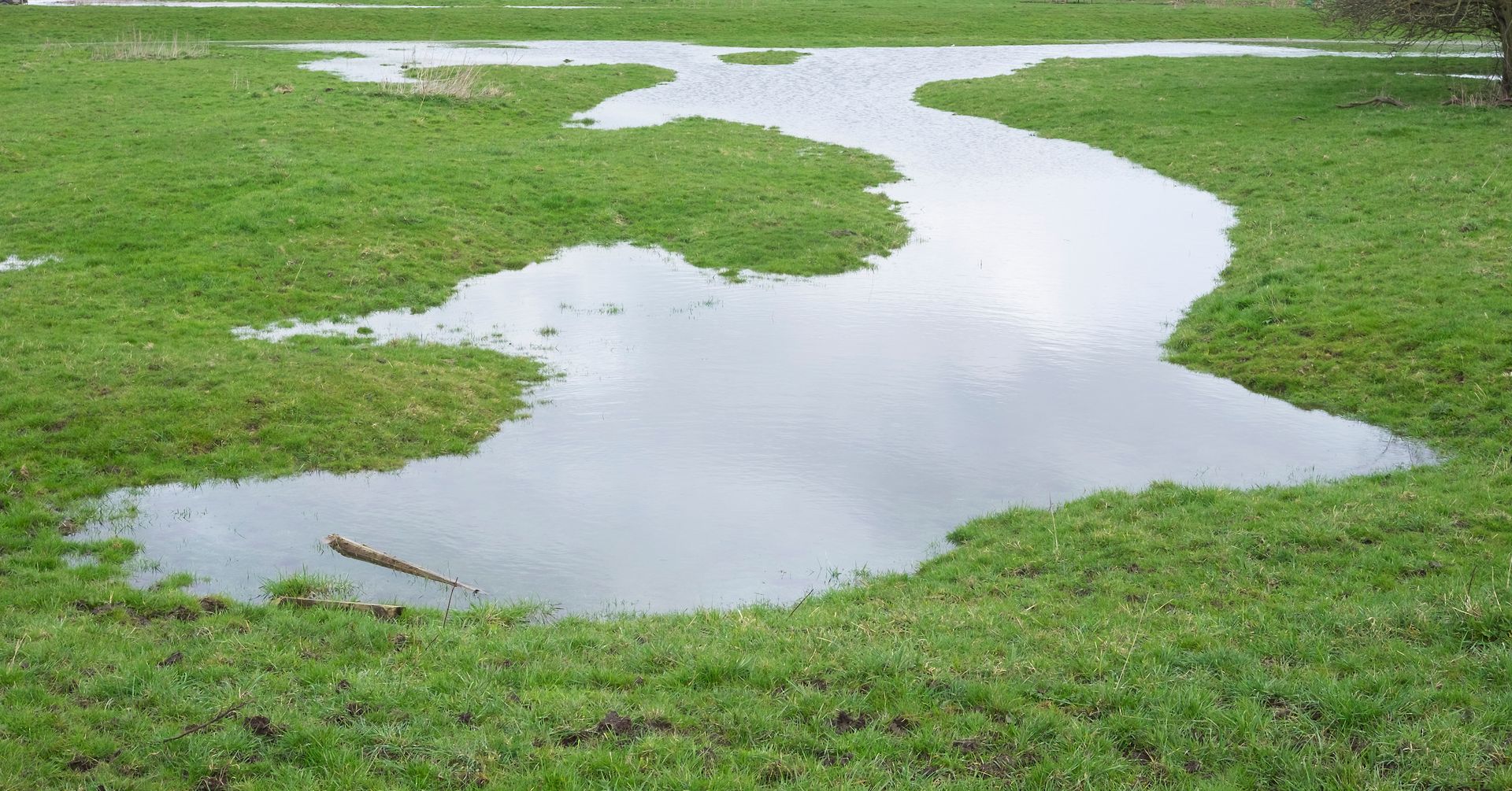
For patios installed against a foundation, integrating with the existing downspout drainage and grading matters as much as the patio base itself. Our overview of yard drainage problems covers the signals that something upstream of the patio needs fixing before the patio goes in.
Common Base Mistakes That Lead to Patio Failure
Most failed patios we are called to replace share a small number of root causes. Any one of these alone causes a patio to look tired within a few seasons. Combining two or three guarantees a rebuild within five years.
- Thin base material (1 to 2 inches instead of 4 to 6) is the most common because it cuts the most cost on a DIY estimate
- Wrong base material (sand only, stone dust, or pea gravel) substituting for proper crushed stone
- Skipping compaction or compacting the entire base in one lift instead of 2-inch lifts
- Building over organic topsoil or wet clay without stripping or stabilizing the subgrade
- Missing edge restraints, which lets the field spread outward at the perimeter
- Skipping the slope away from the house, which traps water on the patio surface
- Wrong bedding sand (stone dust or play sand instead of coarse concrete sand)
DIY vs. Hiring a Pro
A small, simple patio (a 10 by 10 sitting area in a flat backyard, accessible by wheelbarrow, away from structures) is a reasonable DIY project for a homeowner willing to rent a plate compactor and put in the labor. Excavation, base installation, and paver setting are physically demanding but technically straightforward at small scale.
The job moves into pro territory when any of these factors are in play:
- The patio is large enough that hand-mixing and hand-compacting becomes impractical (typically over 200 square feet)
- The site has slope or drainage complications that affect the base elevation
- The patio meets a structure (house, pool, retaining wall) that requires precision integration
- The subgrade is clay-heavy, has high water table, or shows existing drainage problems
- The patio will see vehicle load and needs the heavier 8 to 10 inch base spec
- The homeowner does not want to risk redoing the work in five years and prefers a workmanship warranty
A professional paver installation costs more upfront but typically pays for itself through warranty, base spec, and the integration with surrounding hardscape elements.
For cost ranges and what drives the final number, our breakdown of
paver patio cost in Connecticut walks through typical pricing in this market.
Frequently Asked Questions

Is stone dust a good base for pavers?
No. Stone dust (also called screenings or quarry dust) compacts dense and looks like a solid base, but it traps water, turns into a slurry when wet, and does not provide the load-bearing capacity of proper crushed stone. Use 3/4-inch minus crushed stone for the base layer and coarse concrete sand for the bedding layer.
Do you need geotextile fabric under a paver patio?
It depends on the soil. Non-woven geotextile fabric is recommended over clay-heavy or unstable subgrade, which is common in parts of central Connecticut. The fabric prevents fine soil particles from migrating up into the base and weakening it. On well-drained sandy subgrade, the fabric is optional but never hurts.
Can I install a paver patio over an existing concrete slab?
Sometimes. A structurally sound, level concrete slab can serve as the base for a thin overlay installation using a thinner paver and a mortar-set or sand-set method. The slab has to be cracked-free, sloped correctly for drainage, and clean. Most failed slabs are not good candidates and need full removal before a proper paver patio base goes in.
Why is my paver patio sinking or shifting?
The most common causes are thin or improperly compacted base, wrong base material (sand only or stone dust), missing edge restraints, organic soil under the base that has compressed over time, or inadequate drainage causing freeze-thaw damage. Sinking patios usually need full removal and reinstallation with proper base; partial fixes rarely hold.
Get a Quote for a Properly Built Paver Patio in Connecticut
If you are planning a new paver patio or fixing one that has started to fail, the base is where the investment actually lives. Our team builds patios across Wethersfield, Cromwell, Newington, Berlin, Glastonbury, Portland, Middletown, and the surrounding Hartford County towns, with the base spec built around how this climate actually treats outdoor hardscape.
Use our
contact form to schedule a free on-site consultation. We will walk the site, talk through grade, drainage, and access, and give you a written quote with the base specification and material brands listed by line item. You can also browse our
gallery for recent paver installs across central Connecticut.
Request an Estimate
For more information about our services or to schedule an estimate, call us at (860) 490-0852 or complete the form.
Request an Estimate
For more information about our services or to schedule an estimate, call us at (860) 490-0852 or complete the form.
Latest Posts