Commercial Snow Removal Contract: What to Look For
October 12, 2026
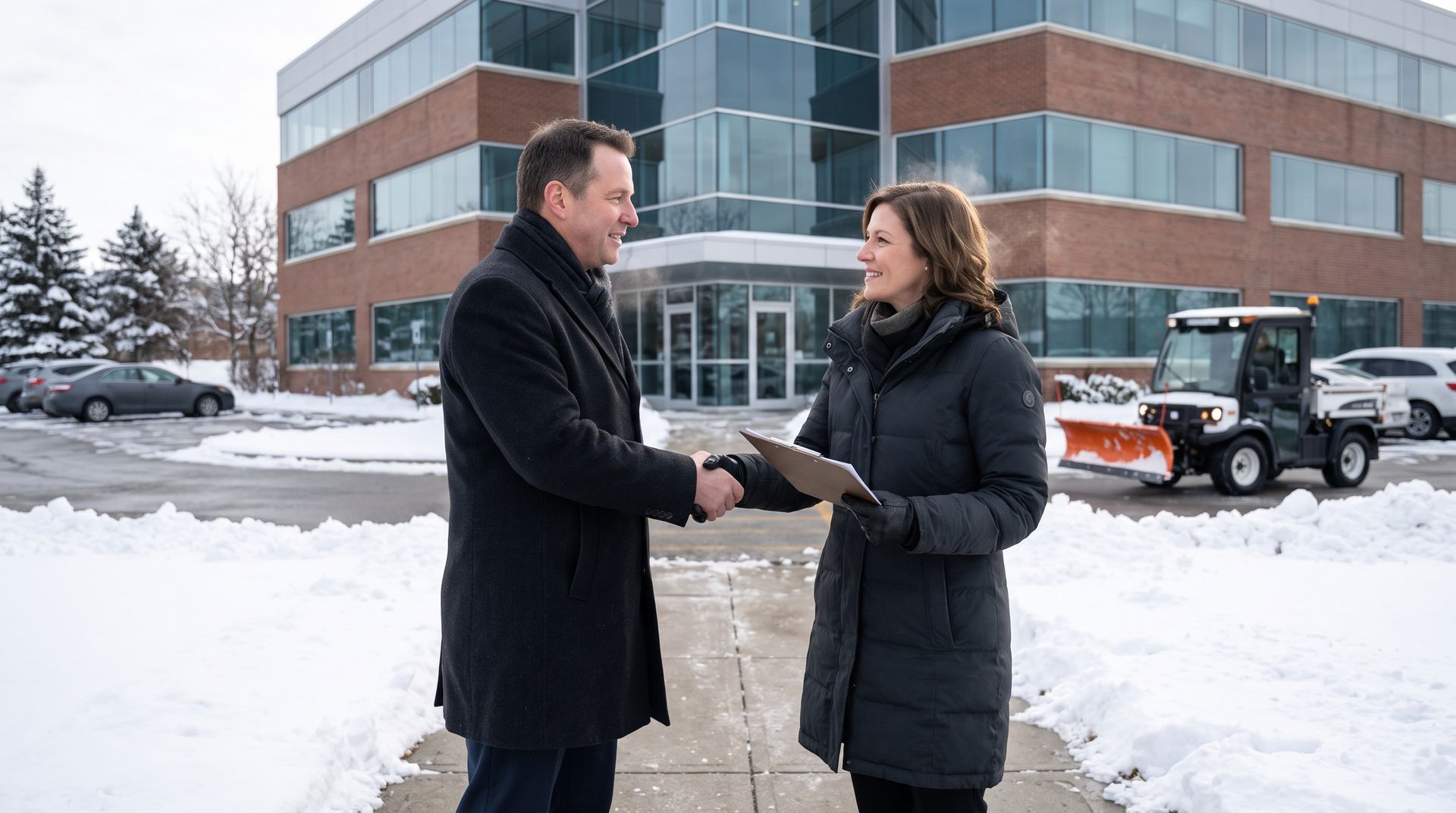
A strong commercial snow removal contract spells out exactly when service starts, what areas get cleared, how ice is handled, how fast the crew responds, how pricing works across a light or heavy winter, how service is documented, and who carries what insurance and liability. The most important clauses are the service trigger (a set snow depth or a zero-tolerance standard), the scope of work (lots, drives, walks, entrances, and loading areas), deicing terms, response and completion times, pricing structure, documentation, and insurance and indemnification. A vague contract often looks cheaper on paper but leaves property managers exposed when a storm hits at 3 a.m. or someone slips on a refrozen walkway.
OBEE Landscaping & Outdoor Design is a licensed and insured commercial landscaping and snow and ice management company (CT HIC-0650801) based in Rocky Hill, serving commercial properties across Central Connecticut. We run a zero-tolerance, all-inclusive snow and ice program, which means our crews are dispatched when conditions call for service rather than waiting for a set snowfall depth. This guide walks through the parts of a snow contract that matter most so you can compare proposals with confidence.
In This Guide
- Key Contract Clauses at a Glance: What to look for and red flags.
- Service Triggers: Depth-Based vs. Zero Tolerance: When the crew shows up.
- Scope of Work: What Gets Cleared: Lots, walks, and entrances.
- Ice Management and Deicing: Salt, pre-treatment, and refreeze.
- Response Times and Service Priorities: Timing during storms.
- Pricing Structures Explained: Seasonal, per-event, and hourly.
- Insurance, Liability, and Indemnification: Protecting your property.
- Documentation and Communication: Proof of service.
- Exclusions and Extra Charges: What is not included.
- Questions to Ask Before You Sign: Comparing providers.
- Frequently Asked Questions: Quick answers.
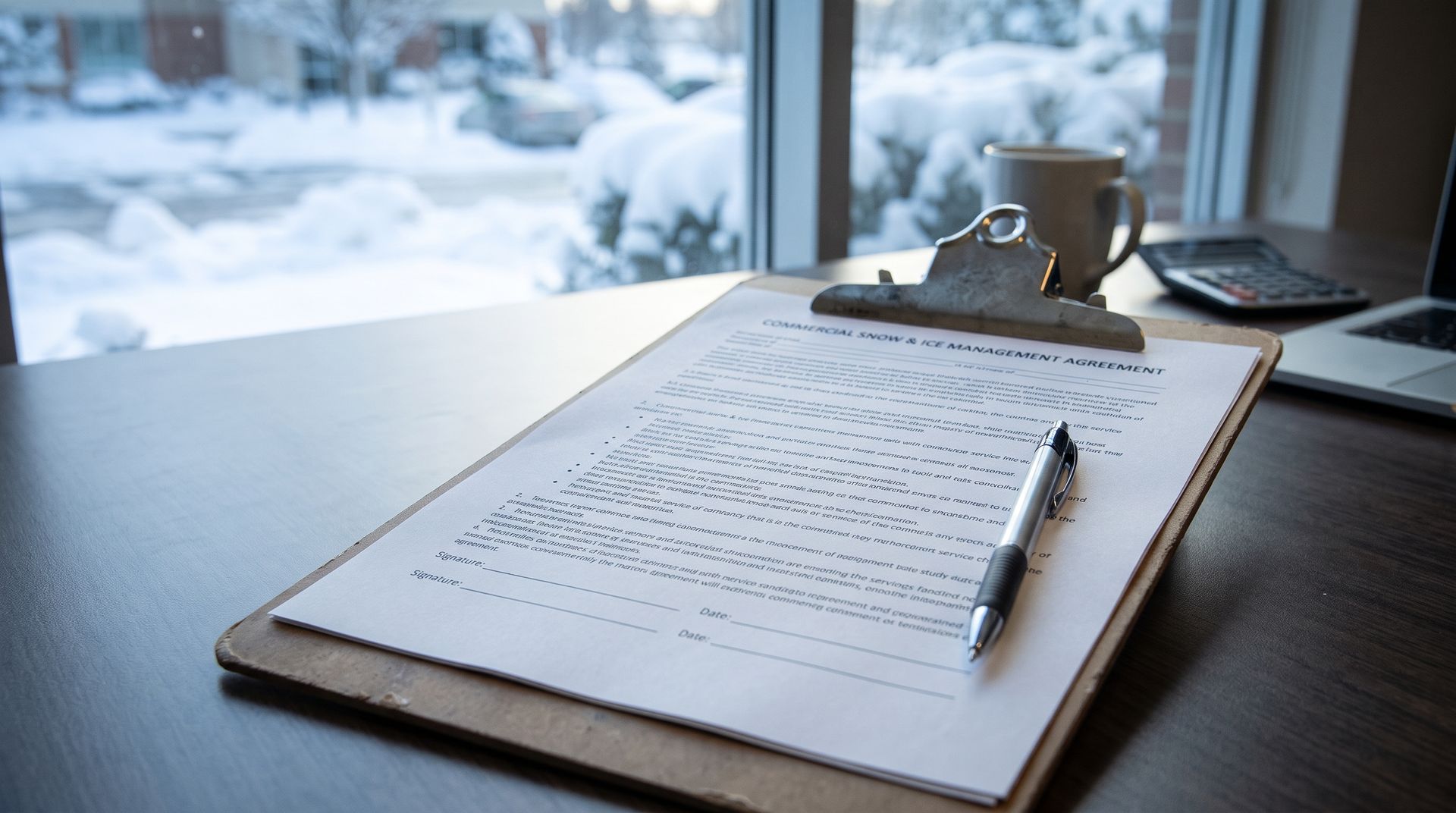
Key Contract Clauses at a Glance
| Contract Clause | What a Good Contract Includes | Red Flags |
|---|---|---|
| Service trigger | A clear depth trigger or a zero-tolerance standard | "As needed" with no definition |
| Scope of work | A site map showing every lot, drive, walk, and entrance | General language like "parking areas" |
| Deicing | When and where salt or ice melt is applied, and whether it is included | Salt billed separately with no cap or estimate |
| Response time | Target arrival and completion times by area | No timing commitments at all |
| Pricing | A structure that fits your budget, with clear rates for extras | Undefined "additional services" |
| Insurance | Proof of liability, auto, and workers' compensation coverage | No certificate of insurance |
| Documentation | Time-stamped service logs and photos | No records of when service occurred |
| Term and renewal | Clear start and end dates and renewal terms | Automatic renewal buried in fine print |
Use this table as a checklist when you review proposals. Any row where a proposal falls into the red flag column deserves a follow-up question.
Service Triggers: Depth-Based vs. Zero Tolerance
The trigger is one of the most important parts of any snow contract because it determines when service begins.
Depth-Based Triggers
Many contracts start plowing once snow reaches a set depth, commonly one or two inches. Below that, crews may only salt, or may not come at all. Depth triggers can lower costs, but they can leave a light dusting or freezing drizzle untreated, which is often when slips happen.
Zero-Tolerance Service
A zero-tolerance contract means the provider responds whenever conditions create a hazard, regardless of depth. That includes light snow, freezing rain, black ice, and refreeze. It costs more than a high trigger, but it offers far more protection for retail centers, medical offices, multi-family properties, and any site with steady foot traffic.
Which Is Right for Your Property
Consider your foot traffic, hours of operation, the people who use your site, and your tolerance for risk. A warehouse with limited overnight activity may accept a higher trigger. A medical office or apartment complex usually needs tighter standards.
Scope of Work: What Gets Cleared
A vague scope is one of the most common sources of conflict.
Ask for a Site Map
A good contract includes a marked site map showing every area to be cleared and where snow will be piled. The map should cover:
- Parking lots and drive lanes, including handicap-accessible spaces.
- Sidewalks and walkways around the building and to the street.
- Building entrances and exits, including emergency exits.
- Loading docks and service areas.
- Dumpster pads and fire lanes.
- Stairs and ramps.
- Snow storage areas that will not block drainage, sightlines, or parking.
Sidewalks Along the Street
Many Connecticut municipalities require property owners to clear public sidewalks next to their property, and some local ordinances shift liability for snow-related injuries on those sidewalks to the abutting owner. Make sure public sidewalks are included in the scope if your town requires it.
Snow Stacking and Relocation
When snow piles get too large, they block parking, sightlines, and drainage. Ask whether snow relocation or hauling is included or billed separately.
Ice Management and Deicing
Plowing removes snow. Ice management prevents slips.
What the Contract Should Say
Look for clear language on when deicing is applied, which areas are treated, what materials are used, and whether deicing is included in your price or billed per application.
Pre-Treatment
Some providers apply salt or liquid deicer before a storm to keep snow and ice from bonding to pavement. That can make plowing more effective and reduce the amount of salt needed later.
Refreeze
Melting during the day and freezing overnight is one of the biggest causes of slip-and-fall incidents. The contract should explain how the provider monitors and treats refreeze after the storm ends.
Sensitive Areas
Ask about using ice melt products that are gentler on concrete, landscaping, and nearby wetlands, especially around entrances and planted islands.
Response Times and Service Priorities
Arrival and Completion Targets
Ask when the crew will arrive once a storm begins and how long it will take to complete each area. Commercial properties often need lots and walks open before business hours.
Priority Areas
During heavy storms, providers usually clear entrances, fire lanes, and main drive lanes first, then return for full cleanup. The contract should describe this sequence.
Continuous Storms
For long storms, ask how often crews will return. Some contracts commit to service at set intervals during snowfall.
Equipment and Staffing
Ask what equipment and crew size will be assigned to your property, and what backup plans exist if equipment breaks down. Route size matters. A provider with too many properties may not reach you on time.
Pricing Structures Explained
There are three common pricing models.
Seasonal Contracts
A fixed price for the season, usually paid in monthly installments, regardless of how many storms occur. Seasonal contracts make budgeting predictable. Ask what happens in an extreme winter, such as caps on the number of events or charges above a certain total snowfall.
Per-Event or Per-Push Pricing
You pay for each storm or each plowing visit. Costs track with the winter, so mild seasons cost less and heavy seasons cost more. Make sure the contract defines what counts as an event or a push.
Hourly or Time and Materials
You pay for equipment hours and materials used. This can be useful for unusual sites but makes budgeting harder.
Comparing Quotes
Compare proposals using the same scope, trigger, and deicing assumptions. A low quote with a high trigger and separate salt charges may cost more by spring than a higher all-inclusive quote. For more on how we approach pricing, see our
commercial snow and ice management page.
Insurance, Liability, and Indemnification
Slip-and-fall claims are a real concern for commercial properties, and the contract should address risk clearly.
Certificate of Insurance
Request a current certificate showing general liability, commercial auto, and workers' compensation coverage. Many property owners ask to be named as an additional insured.
Indemnification Clauses
Read hold-harmless and indemnification language carefully, and have your attorney or risk manager review it. These clauses determine who is responsible for claims tied to snow and ice.
Connecticut's Storm in Progress Rule
Connecticut courts have generally recognized that property owners are allowed a reasonable time after a storm ends to clear snow and ice. That does not remove the need for timely service once the storm passes, and refreeze after a storm is a common source of claims. Talk with your attorney about how this applies to your property and contract.
Property Damage
The contract should explain how damage to curbs, landscaping, light poles, or turf is reported and repaired. Ask whether the provider marks edges and obstacles before the season.
Documentation and Communication
Service Logs
Time-stamped records of every visit, including arrival time, areas serviced, and materials applied, are one of the most valuable parts of a contract. They can be critical if a slip-and-fall claim arises months later.
Photos and GPS Tracking
Some providers use photos or GPS tracking to document service. Ask what records you will receive and how long they are kept.
Point of Contact
The contract should name who to call during a storm and how quickly calls are returned. A direct line to a supervisor is far more useful than a general office number during a blizzard.
Pre-Season Walkthrough
A walkthrough before winter lets both sides confirm the site map, mark hazards, and agree on snow storage areas.
Exclusions and Extra Charges
Ask what is not included. Common exclusions or separately billed items include:
- Snow hauling or relocation off site.
- Roof snow removal.
- Clearing around vehicles left in the lot.
- Damage caused by objects hidden under snow.
- Extra deicing beyond the agreed amount.
- Service outside the defined site map.
Knowing these upfront prevents surprises when the invoices arrive.
Contract Term, Renewal, and Termination
Snow contracts often run from fall through spring, such as November 1 to April 15. Check the exact dates, since early or late storms happen in Connecticut. Look at renewal terms, whether pricing can change at renewal, and how either side can end the agreement. A clear termination clause protects you if service falls short. Signing early in the fall also helps secure a spot on a provider's route before schedules fill.
Questions to Ask Before You Sign
Before signing, ask each provider how many properties are on the route that includes yours, what time your lot is typically finished after an overnight storm, and who makes the call to dispatch crews. Ask how they handle walks and entrances compared with the parking lot, and whether sidewalk crews and plow trucks work at the same time. Ask for references from similar properties, such as retail centers, offices, or apartment communities, and how long those clients have stayed with them. Finally, ask to see a sample service log and invoice so you know exactly what documentation and billing will look like before the first storm.
Pairing Snow Service With Year-Round Property Care
Many property managers find it easier to work with one company for both snow and ice management and seasonal grounds care. The same team learns the property, knows where curbs, islands, and drains are, and can repair any winter damage to turf or beds in spring. Learn more about our
commercial landscaping and
commercial landscaping maintenance services.
Talk to OBEE About Your Snow Contract
If you are reviewing proposals for this winter, our team can walk your property, build a clear site map, and explain our zero-tolerance approach so you can compare options side by side. See our FAQ or read what clients say in our reviews.
Call OBEE Landscaping & Outdoor Design at (860) 490-0852 or
contact us. We are located at 148 Dividend Road in Rocky Hill and serve commercial properties across Central Connecticut.
Frequently Asked Questions
What should be included in a commercial snow removal contract?
A strong contract includes a defined service trigger, a site map showing every area to be cleared, deicing terms, response times, pricing structure, insurance requirements, documentation, exclusions, and the contract term.
What is a zero-tolerance snow removal contract?
It is a contract in which the provider responds whenever snow or ice creates a hazard, regardless of depth. It provides more protection than depth-based contracts, especially for properties with steady foot traffic.
Is a seasonal or per-push snow contract better?
Seasonal contracts offer predictable budgeting, while per-push contracts follow the actual winter. The best choice depends on your budget, your risk tolerance, and how much snow you expect.
When should you sign a commercial snow removal contract?
Ideally in late summer or early fall. Signing early gives the provider time to plan routes, walk the site, and mark hazards before the first storm.
Does a snow removal contract protect against slip-and-fall liability?
It can reduce risk through timely service and documentation, and through insurance and indemnification terms, but it does not eliminate liability. Have your attorney or risk manager review the contract.
Request an Estimate
For more information about our services or to schedule an estimate, call us at (860) 490-0852 or complete the form.
Request an Estimate
For more information about our services or to schedule an estimate, call us at (860) 490-0852 or complete the form.
Latest Posts