How to Prepare Your Connecticut Lawn for Winter
November 3, 2026
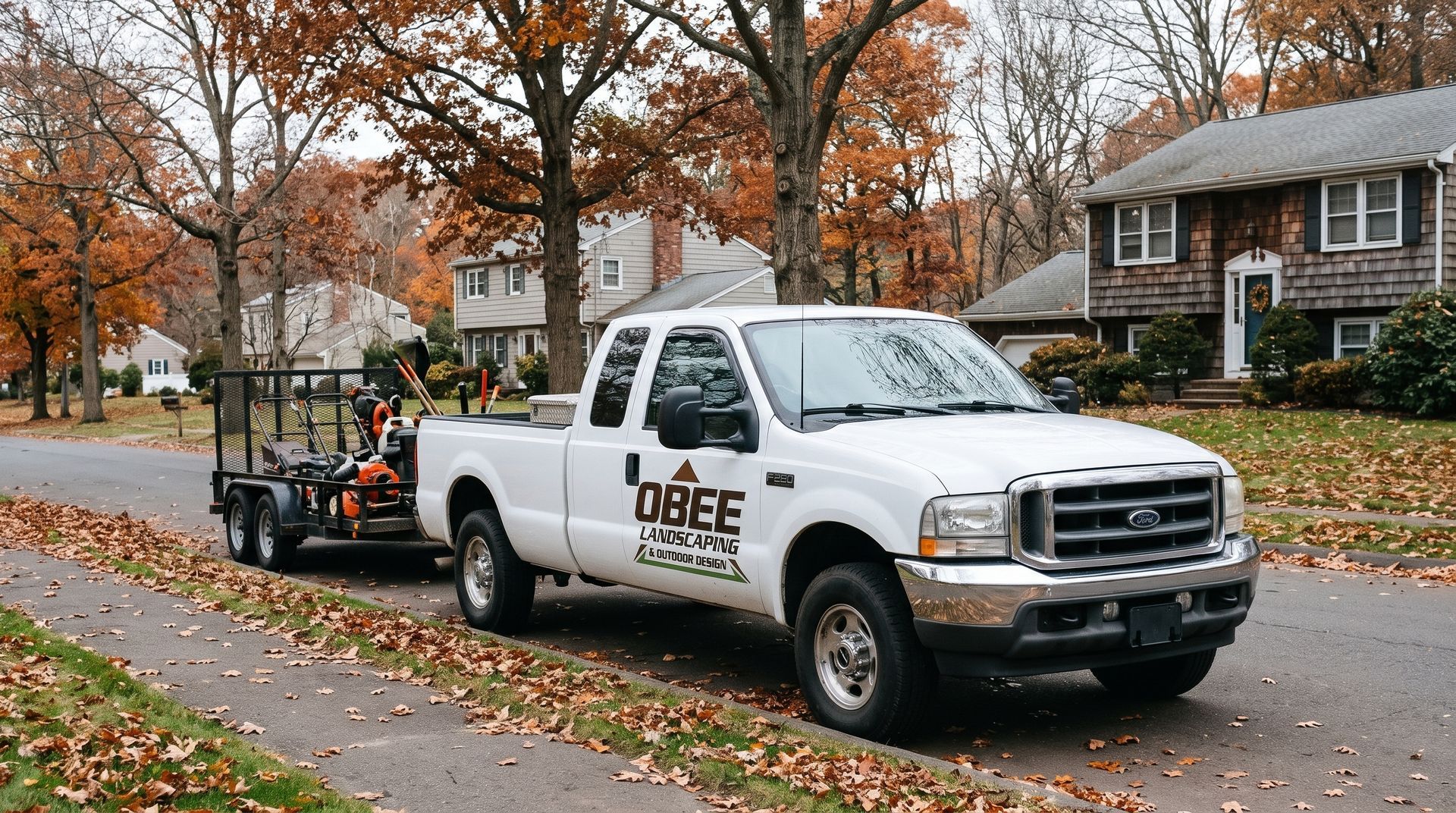
OBEE Landscaping & Outdoor Design has maintained lawns across Central Connecticut since 2017, working from our base in Rocky Hill. Every fall, our crews run the last mows, leaf cleanups, and end-of-season walkthroughs in Wethersfield, Newington, Berlin, Cromwell, Glastonbury, and nearby towns. We are a licensed and insured home improvement contractor (HIC-0650801), and we see in April which lawns were set up well in November and which were not. This guide covers what actually matters for a Connecticut lawn heading into winter.
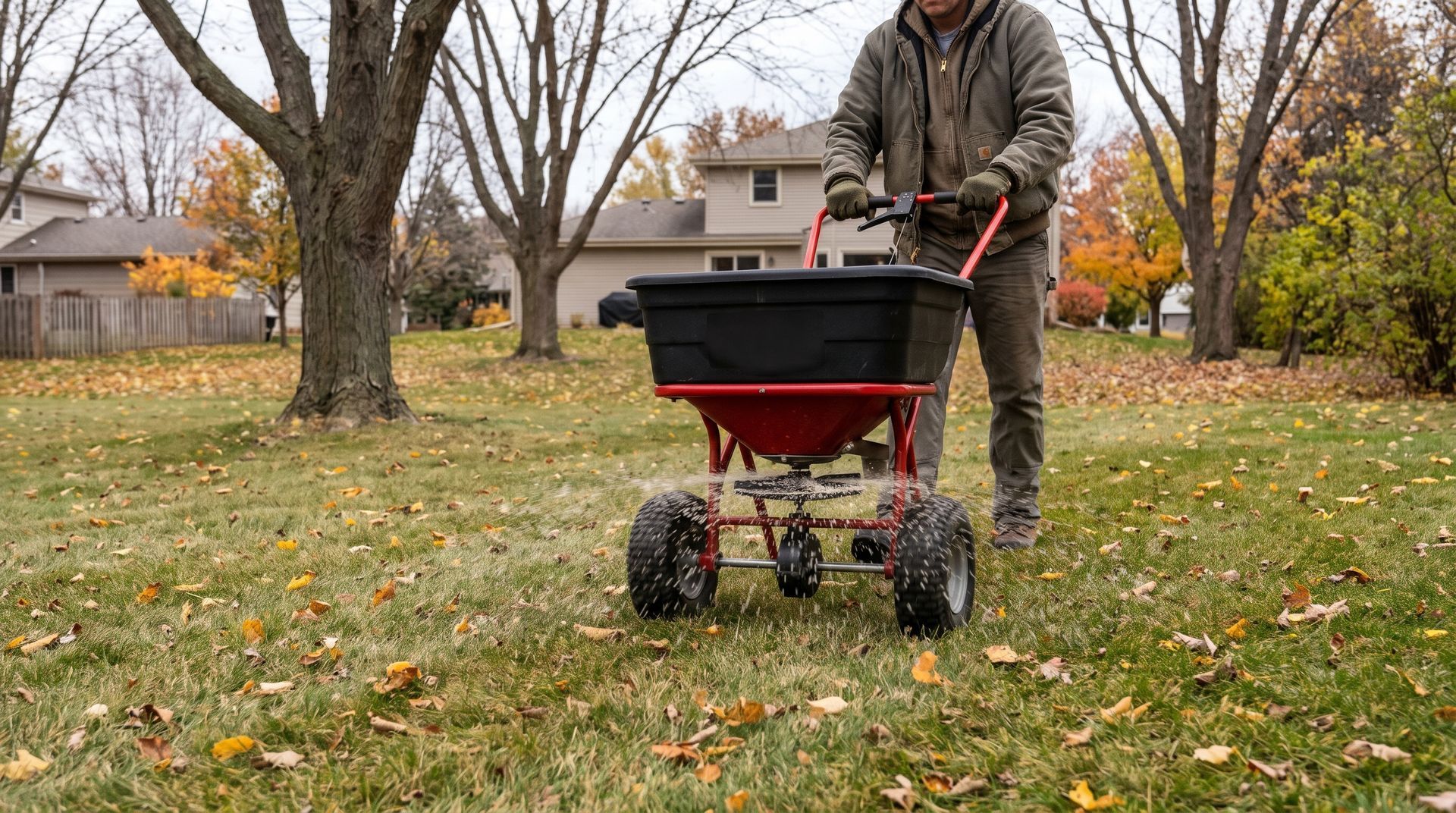
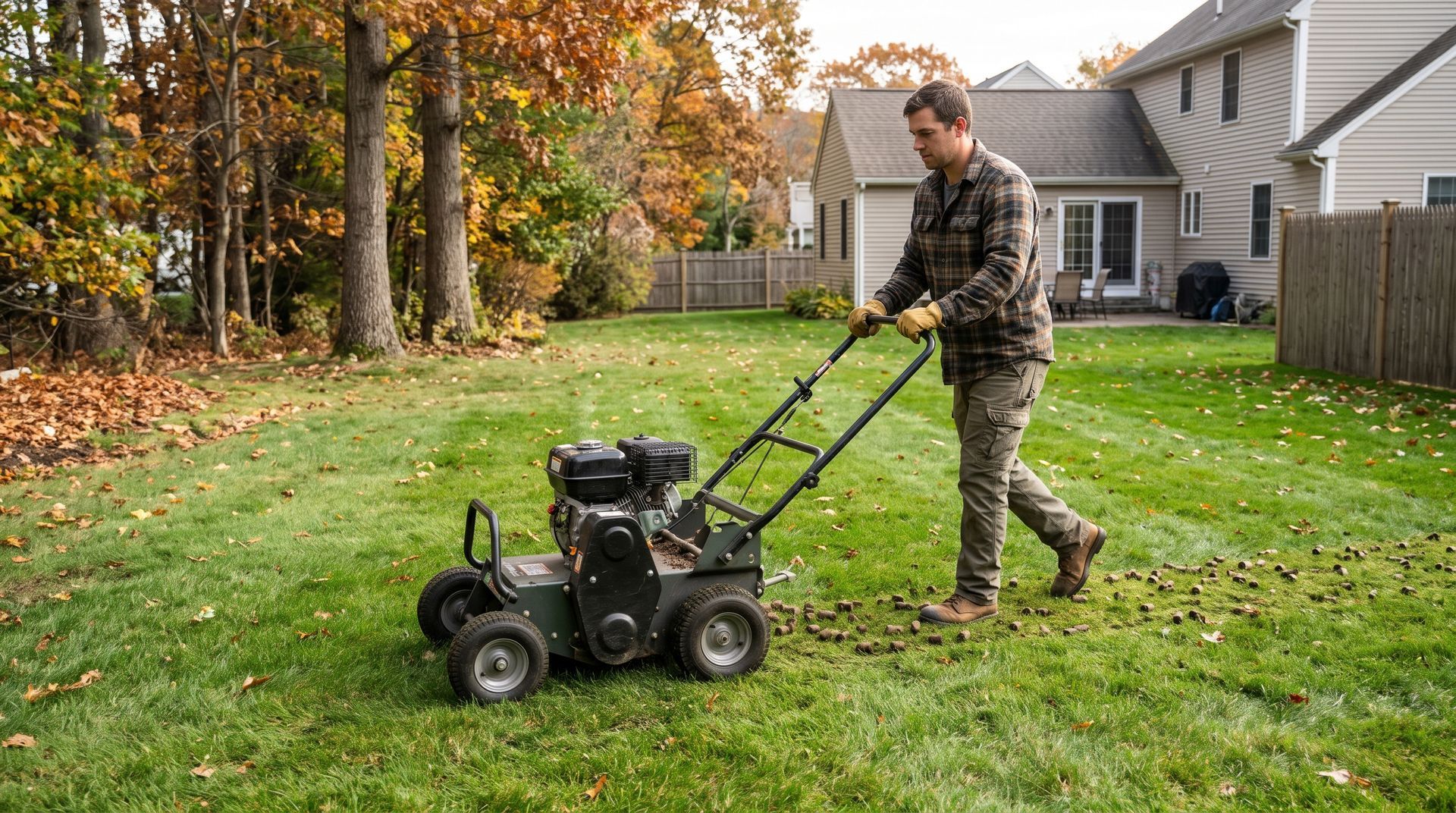
Quick Answer: Preparing a Connecticut lawn for winter comes down to six things. Feed and seed early enough for the grass to use it, which means fertilizer by mid-October. Keep leaves from matting on the turf, finish with a final mow around 2.5 to 3 inches, and water if the fall has been dry. Shut down irrigation before the first hard freeze, and stake edges before the plows come. Skip the late-November “winterizer” advice from national brands: Connecticut law restricts phosphorus fertilizer on lawns from December 1 to March 15, and UConn recommends fertilizing only between April 15 and October 15.
In This Guide
- A Winter Prep Timeline for Central CT: What to do and when.
- If It Is Already November: Tasks that are not too late.
- Fertilizer and Connecticut Law: Why winterizer timing differs here.
- Leaves, the Final Mow, and Water: The three fall basics.
- Protecting Turf From Winter Damage: Snow mold, voles, salt, and plows.
- Lawn Areas That Need Extra Attention: New seed, shade, and wet spots.
- Common Winter Prep Mistakes: What to avoid.
- Get Help Getting Your Lawn Ready: Fall service visits.
- Frequently Asked Questions: Quick answers.
A Winter Prep Timeline for Central Connecticut
Winter prep is not a single November weekend. The most useful work happens while the grass is still growing, from late summer through mid-fall.
| When | Task | Why It Matters |
|---|---|---|
| Late August to September | Core aerate and overseed thin areas | Seed needs warm soil and several weeks of growth before frost |
| September to mid-October | Fertilize if a soil test or lawn color calls for it | Grass can still take up nutrients and build roots |
| October to November | Clear leaves weekly or mulch-mow light layers | Matted leaves smother turf and invite disease |
| Early to mid-November | Final mow at about 2.5 to 3 inches | Prevents matting without scalping the crowns |
| Before the first hard freeze | Drain hoses and blow out irrigation | Frozen water cracks pipes, heads, and valves |
| Late November | Stake driveway and walkway edges | Plows and snowblowers can see where turf starts |
| December to mid-March | No fertilizer, limit traffic on frozen turf | State fertilizer rules apply and frozen grass breaks easily |
In Central Connecticut, the first hard frosts usually arrive in late October or early November. Shoreline towns run a little later, and the northwest hills run earlier.
If It Is Already November
Plenty of homeowners start thinking about winter prep once the leaves are down, and some tasks still make a real difference this late:
- Leaf removal, right up until snow covers the lawn.
- The final mow, once growth has stopped.
- Deep watering, if the fall has been dry and the ground is not frozen.
- Irrigation shutdown and hose storage, before a hard freeze.
- Clearing toys, furniture, and hoses off the lawn so nothing flattens the turf under snow.
- Staking edges along driveways and walks before the first plowable storm.
- Dormant seeding of bare spots, once the soil is too cold for seed to sprout until spring.
Fertilizing, core aeration, and regular overseeding all need active growth to work. In November, the grass cannot use them, and late fertilizer is more likely to wash off than help, so note thin areas now and plan to address them next September.
Fertilizer and Connecticut Law
This is where Connecticut lawns differ most from the advice on national websites and fertilizer bags. Many guides tell you to apply a “winterizer” in late October or November, sometimes with phosphorus. In Connecticut, that timing and that product often do not fit.
What Connecticut Law Says
Connecticut’s 2012 lawn fertilizer law, Public Act 12-155, limits phosphorus fertilizer on lawns. It bans applying fertilizer, soil amendments, or compost containing phosphate to any lawn from December 1 through March 15. On established lawns, phosphate is only allowed when a soil test from the past 180 days shows a need, or when you are seeding or sodding to establish or repair turf. Phosphate-containing products also cannot go within 20 feet of a brook, pond, lake, or other water body, or within 15 feet when a drop spreader, deflector, or targeted spray is used.
UConn’s Timing and the Case for a Soil Test
The University of Connecticut’s soil testing lab recommends applying lawn fertilizer only between April 15 and October 15, when the grass is actively growing. Cool-season lawns like Kentucky bluegrass, perennial ryegrass, and fescues get the most from an early fall feeding in September, which helps them recover from summer and store energy for spring. A soil test from UConn’s Soil Nutrient Analysis Laboratory tells you whether the lawn needs phosphorus at all, whether the pH needs lime, and how much nitrogen makes sense. Fall is a good time to sample, since lime applied in fall has the winter to work into Connecticut’s naturally acidic soils.
Leaves, the Final Mow, and Water
Do Not Let Leaves Mat
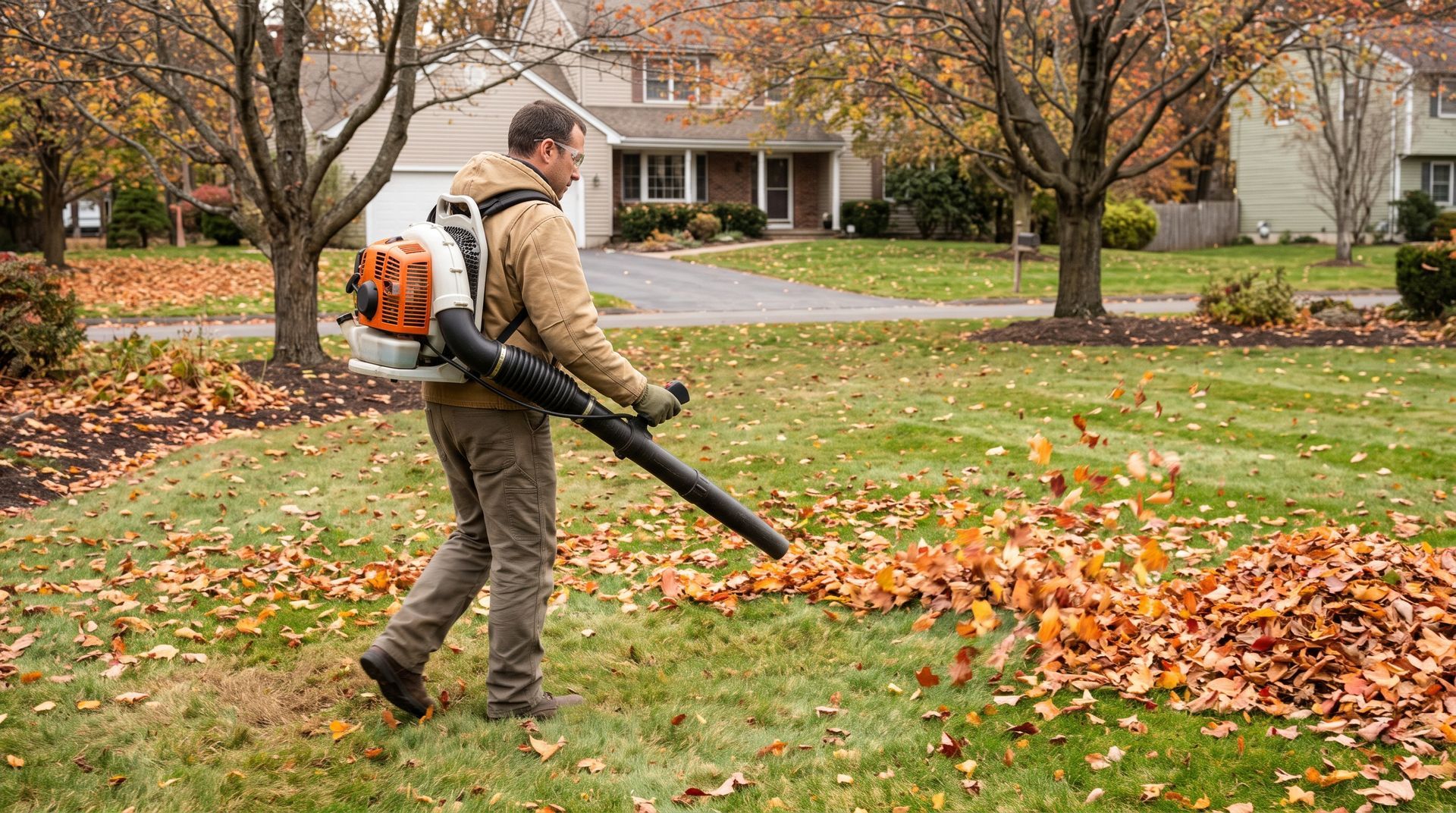
A light scatter of leaves can be mulched into the lawn with the mower. Heavy layers from oaks and maples are a different story. Wet leaves mat down, block light, hold moisture against the grass, and create ideal conditions for snow mold. Clear them before the first snow, even if that means one more pass in late November, because the last leaves to fall are the ones that sit under snow all winter. Our guide on fall yard cleanup vs. lawn maintenance explains how a cleanup visit differs from regular mowing.
Finish at the Right Height
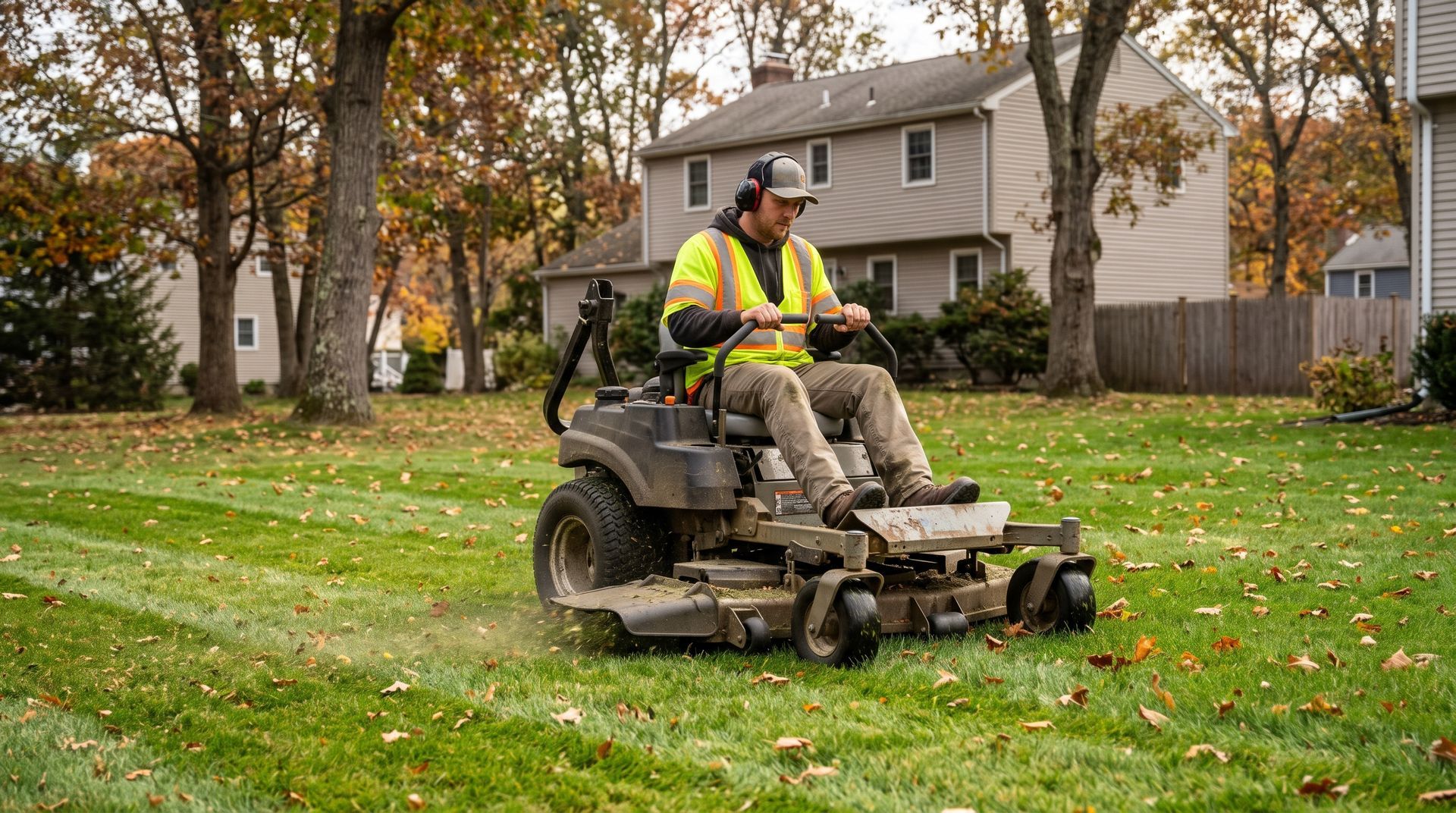
Keep mowing until the grass stops growing, then make the last cut at about 2.5 to 3 inches. Grass left much longer can flop over and mat under snow. Grass cut much shorter loses the leaf tissue that protects the crowns, so dropping the mower to its lowest setting to “save a cut” stresses the lawn right before winter and invites weeds next spring. Our article on when to stop mowing your lawn in Connecticut covers timing by region and how to tell growth has stopped.
Water Before Dormancy, Then Shut Down Irrigation
Lawns and plants should go into winter well hydrated. UConn’s home and garden educators recommend continuing to water lawns, beds, and new evergreens during a dry fall until a hard frost, because a lawn that goes dormant drought-stressed often comes back thin and straw-colored in spring. Once watering is done, have an in-ground system blown out with compressed air before overnight temperatures drop into the 20s, and disconnect and drain hoses, since a hose left on an outdoor faucet can freeze and crack the faucet or the pipe behind it. A cracked backflow preventer or zone valve is an expensive spring surprise. Our
drainage and irrigation team can help with both.
Protecting Turf From Winter Damage
Snow Mold and Voles
Gray and pink snow mold show up in spring as matted, straw-colored circles, often where snow sat longest. Long grass, matted leaves, and heavy late-season nitrogen all make it worse, and a clean lawn mowed at the right height is the best prevention; most snow mold damage recovers with a light raking once the lawn dries out. Meadow voles cause the other common spring surprise: winding, chewed-down trails across the lawn from tunneling under snow. They prefer long grass and thick cover near beds, stone walls, and woodpiles, so the right final cut and pulling mulch back from the lawn edge give them less cover.
Salt, Plows, and Traffic on Frozen Turf
Lawn edges along streets and driveways take a beating from plows and de-icing salt. Stake edges with reflective markers before the first storm so plow drivers and snowblowers can see where the turf starts, avoid piling heavily salted snow on the same strip of lawn all winter, and water thoroughly in spring to flush salt from the root zone. Frozen grass blades are brittle, so repeated foot traffic across a frosted lawn leaves brown footprints and compacted paths, and cars, trailers, or equipment parked on soft or thawing turf leave ruts that take a long time to recover.
Shrubs Along the Lawn Edge
Foundation shrubs and hedges that border the lawn need their own prep. Water evergreens deeply during a dry fall so they do not dry out in winter wind. Broadleaf evergreens near the street or driveway, like boxwood and holly, can brown from salt spray, so a burlap screen on the road side helps. Skip heavy pruning in late fall, since fresh cuts and new growth do not harden off before cold weather. Our
bush and shrub trimming visits are timed around those windows.
Lawn Areas That Need Extra Attention
Some parts of a lawn are more likely to struggle through winter:
- Newly seeded or sodded areas, which need to go into winter with roots established and should be kept clear of leaves and foot traffic.
- Lawns under oaks and maples, where leaf drop is heavy and late, and shade weakens the turf.
- Wet or clay-heavy spots, where water sits and freezes into ice that can suffocate grass.
- Slopes and banks, which dry out faster in fall and erode if turf is thin.
- Strips along roads and driveways, which take plow damage and salt spray.
Wet spots deserve a closer look before winter. If water still pools after rain, read our guide on
what causes standing water in a yard. Planning a fix in fall means it can be built in spring before the growing season starts.
Common Winter Lawn Prep Mistakes
- Fertilizing too late. Fertilizer applied in late November or on frozen ground does little for the grass and can run off into storm drains and streams, and phosphate products are off-limits on Connecticut lawns from December 1 to March 15.
- Skipping the last leaf drop. Clearing leaves in October and ignoring the late-November drop leaves the most damaging layer under snow all winter.
- Scalping the final cut. A too-short last mow exposes crowns to cold and opens the lawn to weeds in spring.
- Leaving hoses connected. A frozen hose can crack the faucet or the pipe behind it.
- Mowing long into December. Once growth stops, extra mowing on frosty mornings damages brittle blades and compacts wet soil.
Get Help Getting Your Lawn Ready for Winter
Our lawn mowing and maintenance customers get their final cuts and fall cleanup coordinated with the end of the growing season, so leaves come off and the last mow lands at the right height. We serve Rocky Hill and surrounding towns, including Wethersfield, Newington, Cromwell, Berlin, and Glastonbury.
Planning ahead for spring? Our guide on
when to start spring cleanup in Connecticut covers the other end of the season. If winter is when you plan a bigger project, see
what professional landscape design costs before spring estimates fill up. Call OBEE Landscaping & Outdoor Design at (860) 926-3857 or
request an estimate. Our office is at 148 Dividend Road in Rocky Hill.
Frequently Asked Questions
Request an Estimate
For more information about our services or to schedule an estimate, call us at (860) 490-0852 or complete the form.
Request an Estimate
For more information about our services or to schedule an estimate, call us at (860) 490-0852 or complete the form.
Latest Posts