Fire Pit vs. Outdoor Fireplace: Which Is Better for Your Backyard?
September 21, 2026
Quick Answer: A fire pit is the better choice if you want an affordable, social gathering spot that fits almost any yard, with most custom pits running roughly $1,500 to $5,000. An outdoor fireplace is better if you want a dramatic focal point that blocks wind, adds privacy, and holds heat for cooler Connecticut evenings, but it is a bigger build at around $15,000 to $30,000 and often needs a permit. The real question is not looks or budget alone, it is how you gather: a fire pit seats people in a circle, a fireplace faces everyone toward one wall.
At OBEE Landscaping & Outdoor Design, we build both across Rocky Hill and the surrounding Hartford County towns, and we were named a Best of Connecticut 2026 winner for our hardscape work. Because we install fire pits and fireplaces on real Connecticut patios, we know what actually holds up through our freeze-thaw winters and what a homeowner regrets a year later. Here is how to choose.
In This Guide
The Real Difference: How You Gather
Most comparisons start with looks or price, but the difference that actually shapes your evenings is the seating geometry. A fire pit and a fireplace create two completely different social spaces, and matching that to how you entertain is the fastest way to the right answer.
Picture the two arrangements before you think about anything else, because everything downstream, cost, size, and placement, follows from this choice.
The Fire Pit: A Campfire Circle
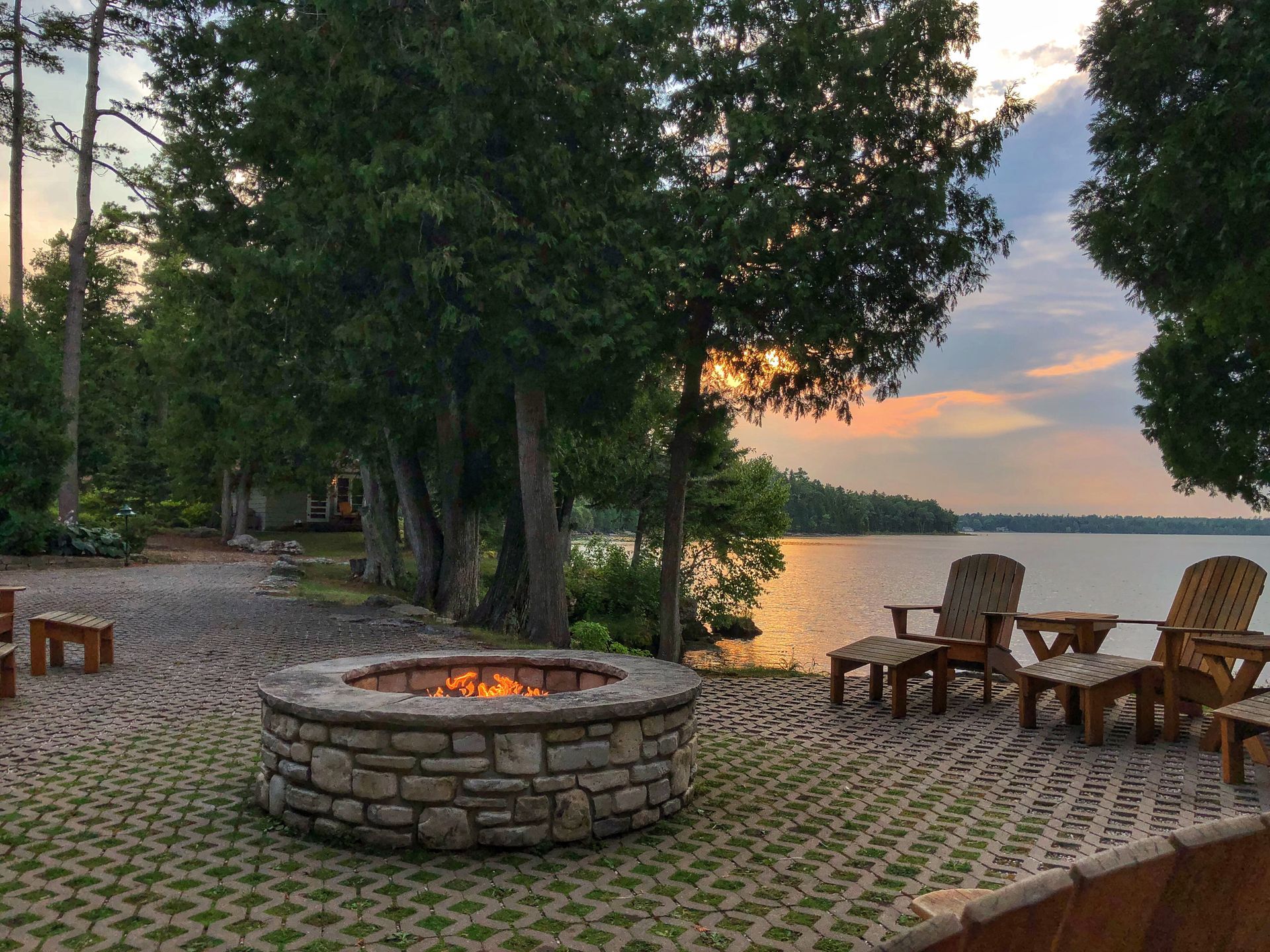
A fire pit puts the fire in the center and seats everyone around it, facing inward. Conversation crosses the middle, and there is no head of the table. That makes it the natural fit for families, kids roasting marshmallows, and larger, casual groups where the point is being together around the flame.
The Fireplace: A Focal Wall
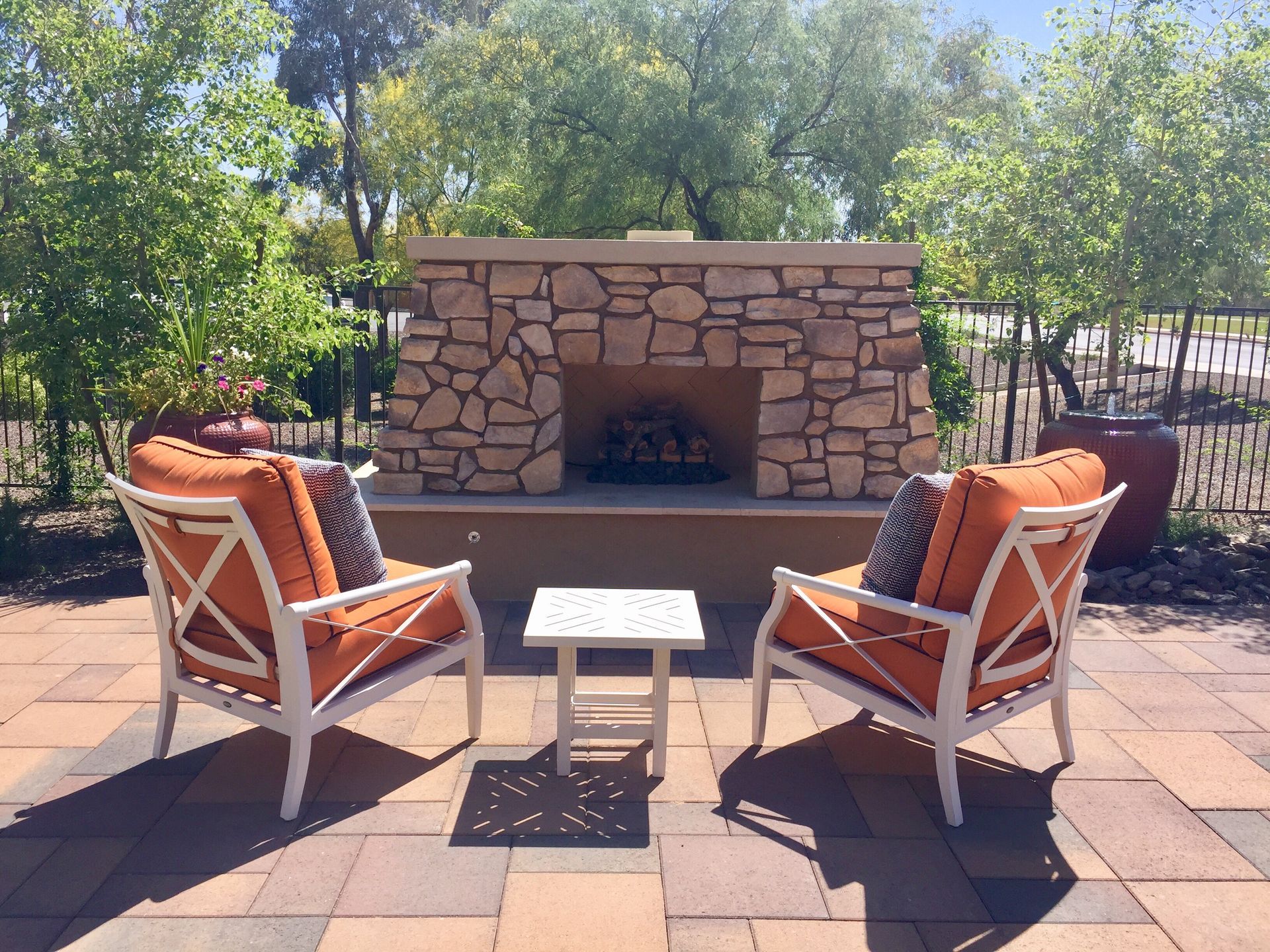
An outdoor fireplace creates a theater arrangement, where seating faces one direction and the fire is the backdrop. It feels more intimate and upscale, better suited to quiet evenings and a defined outdoor room. It also gives you a vertical structure you can build a seating area around, and some homeowners mount an outdoor TV above it the way they would indoors.
Cost: What Each One Runs
The price gap between these two is the first reality check, and it is a wide one. A fireplace is a far larger build in both materials and labor, so it costs several times what a comparable fire pit does.
These are ballpark ranges for a professionally built feature in our area; your number depends on materials, size, and whether you run a gas line.
Typical Price Ranges
Use these to frame your budget before you fall in love with a design.
| Feature | Typical Installed Cost | Adds to Home Value |
|---|---|---|
| Custom masonry fire pit | $1,500 to $5,000 | Around $2,000 to $8,000 |
| Gas fire pit with line run | $6,000 to $10,000 | Around $2,000 to $8,000 |
| Outdoor fireplace | $15,000 to $30,000+ | Around $5,000 to $15,000 |
What Moves the Number
For a fire pit, cost climbs with the features you add on:
- Fuel type: a wood-burning pit is cheapest; running a gas line adds the most
- Materials: basic block versus natural stone cladding
- Seating walls or built-in benches around the pit
- Base and patio work if it is not going on an existing surface
For a fireplace, the structure itself drives the cost, since it is a real chimney and firebox built to code. Both features are cheaper to build as part of a larger patio project than as a standalone add-on later, because the crew, the base work, and the materials are already on site.
Gas or Wood
Fuel is a decision that applies to both features, and it changes daily use more than cost. Wood delivers the crackle, the aroma, and the ritual, but it means storing wood, cleaning ash, and managing smoke. Gas, run from a natural line or a concealed propane tank, turns on and off with a switch, produces no ash, and gives a steadier flame on a breezy night. For a fireplace especially, many Connecticut homeowners choose gas so a cool evening becomes a five-second decision rather than a fire-building project. Wood still wins on ambiance for a classic fire pit, so the right call depends on whether you want the experience of a fire or just the warmth and glow.
Heat, Wind, and the Connecticut Season
In Connecticut, a fire feature earns its keep in the shoulder seasons, the cool evenings of spring and fall when the backyard would otherwise sit empty. How each option handles heat and wind decides how much of that season you actually get.
This is where a fireplace has a genuine performance edge, though it is not the whole story.
How Each Handles Wind and Heat
A fire pit radiates heat in all directions, which is efficient for a surrounding circle but leaves it exposed to wind. On a breezy Connecticut evening, smoke drifts and heat scatters, which can cut a night short. A fireplace's enclosed firebox and chimney shield the flame from wind, direct the smoke up and away, and reflect heat toward the seating, making it the more comfortable choice when the temperature drops or the wind picks up.
Extending the Season
If your goal is to stretch usable time into late fall, the fireplace's wind protection and heat retention buy you more comfortable nights. That said, a well-placed fire pit paired with a wind-sheltered spot on the patio still delivers most of the season for a fraction of the cost, which is why it remains the popular choice for most yards we work on.
Space, Privacy, and Resale
Beyond cost and comfort, the footprint each feature needs and what it does for your property should factor into the decision. These are the practical points that tip a close call.
Think about your yard's size and what else you want the feature to do besides hold a fire.
Footprint and Privacy
A fire pit fits nearly anywhere, from a compact patio to a sprawling yard, and stays low so it never blocks a view. A fireplace needs more room and a substantial footprint, but that vertical mass is also an asset: it can screen an unwanted view, create privacy, or define the edge of an outdoor room. If your patio is tight, the fire pit is usually the practical answer; if you have space and want a statement, the fireplace delivers.
Resale and Safety
Both features add appeal for buyers, with a fireplace generally adding more to home value given its scale. On safety, a fireplace contains the fire behind a firebox, which some families with young children or pets prefer, while a fire pit's open flame calls for a screen and closer supervision. Neither is unsafe when built and used properly; they simply ask for different habits.
Quick Way to Decide
If you are still torn, this usually settles it:
- Choose a fire pit if you want lower cost, a social circle for larger groups, a compact footprint, or a feature for a tight patio
- Choose a fireplace if you want a dramatic focal point, wind protection and heat for cool evenings, privacy or a screened view, and you have the space and budget for it
Why the Base Matters More Than the Stone
Here is the part that separates a feature that lasts from one that cracks, and it is the part homeowners never see. Whatever you choose, its lifespan in Connecticut is decided below ground, not by the stone on top.
We have been called to look at fireplaces and pits where the visible masonry looked fine but the structure underneath was failing, and it almost always traces back to the base.
Frost Heave Is the Enemy
Connecticut's freeze-thaw cycles push and lift anything sitting on an inadequate base. A fireplace is a heavy, tall structure, so a footing that is not deep and properly built will shift with the frost, and cracks work their way up through the masonry within a few seasons. A fire pit is more forgiving, but a pit set on poorly prepared ground still heaves and settles unevenly over our winters.
Proper Base Prep
This is why we build from the ground up with proper base preparation, correct depth, and compacted materials designed to handle Connecticut seasons. It is not the glamorous part of the job, and it is invisible once the stone goes on, but it is the single biggest factor in whether your fire feature still looks right in ten years. If you are planning a patio to go with it, our
paver patio work is built on the same principle, and you can see how we approach fire features on our
fireplaces and firepits page.
Add a Fire Feature Built to Last in Connecticut
Whether you want a social fire pit or a statement fireplace, OBEE Landscaping & Outdoor Design builds both to a standard that holds up through our seasons, base first. We are a locally owned, licensed and insured team serving Rocky Hill and the surrounding Hartford County communities, and a Best of Connecticut 2026 winner. Call us at (860) 490-0852 for a free quote on your backyard project.
Frequently Asked Questions
Is a fire pit or an outdoor fireplace cheaper?
A fire pit is significantly cheaper. A custom masonry fire pit typically runs $1,500 to $5,000, or $6,000 to $10,000 for a gas version with a line run, while an outdoor fireplace usually costs $15,000 to $30,000 or more. The gap comes from the fireplace being a much larger structure with more materials and labor.
Which is better for a small backyard?
A fire pit is usually the better fit for a small yard. It has a low, compact footprint, works on tight patios, and does not block sightlines. An outdoor fireplace needs a larger footprint and more surrounding space, which can overwhelm a smaller backyard.
Does an outdoor fireplace add more value than a fire pit?
Generally, yes. An outdoor fireplace tends to add more to home value, often in the range of $5,000 to $15,000, because of its scale and permanence, while a permanent fire pit typically adds around $2,000 to $8,000. Both are appealing features for buyers.
Which is better in windy or cold weather?
An outdoor fireplace. Its enclosed firebox and chimney block wind, direct smoke up and away, and reflect heat toward the seating area, which makes it more comfortable on cool or breezy Connecticut evenings. A fire pit radiates heat in all directions but is more exposed to wind.
Do I need a permit for an outdoor fireplace in Connecticut?
Often, yes. Because a fireplace is a permanent structure with a chimney, many Connecticut towns require a permit and have setback rules, while most fire pits do not trigger the same requirements. Rules vary by town, so it is worth checking with your local building department, and a professional installer can guide you.
Request an Estimate
For more information about our services or to schedule an estimate, call us at (860) 490-0852 or complete the form.
Request an Estimate
For more information about our services or to schedule an estimate, call us at (860) 490-0852 or complete the form.
Latest Posts